The Dry Garden: On sage and size
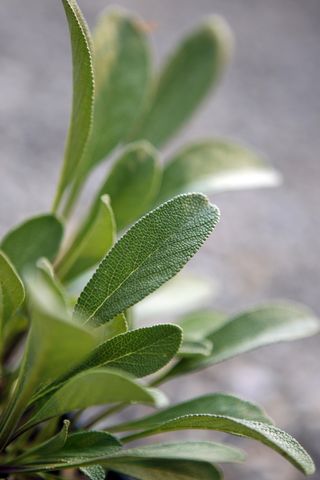
MANY gardens go without sage in California but at the cost of soul. Sage is to the West what lavender is to France.
Sage, or in botanical terms salvia, has it all: Its pungent aromas contain the signature scent of the Western chaparral. The silvers, grays and greens of its foliage anchor the local Craftsman color wheel, and the long-running show of flowers come in a spectrum of white to pink to mauve to scarlet to purple to indigo to sky blue.
Many sages have long had medicinal and culinary applications, but for modern Californians it’s a balm to the eyes. A felt-like quality to the foliage, combined with a loose-branching habit, allows sage to diffuse the harshest midday sunshine rather than reflect it. Sages do not need fertilizer, and in fact they shrivel at the suggestion. Few other plants …
‘Oddball’ crocs
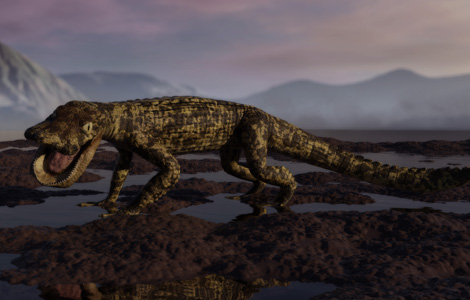
From National Geographic: Built to move on land, DuckCroc may have been quick-witted, as well as quick on its feet. Scans of DuckCroc's brain shows it surrounded by air pockets — signs that it was a turbocharged organ in need of cooling. DogCroc also shared similar characteristics. You might call them the corvettes of crocodiles. But DuckCroc had an even bigger fore brain that was connected to a very specialized nose - perhaps something like a duck-billed platypus.
Amphibian lovers, set your TiVos. National Geographic is set to unveil a new group of “oddball” crocs at 9pm, Saturday November 21st in “When Crocs Ate Dinosaurs.”
“There’s an entire croc world brewing in Africa that we really had only an inkling about before,” Paul Sereno, a paleontologist at the University of Chicago, told National Geographic News. “We knew about SuperCroc, the titan of all crocs, but we didn’t …
North American Native Plant Societies
After the lawn

Garden blogs
