Bad planning and hyperbole
Photo: Bob Chamberlin / Los Angeles Times. Click on the image to be taken to the paper's storm photo gallery.
Contrary to forecasts, including the one repeated here, there were neither particularly heavy rains nor gales in Los Angeles yesterday. “I’m sympathetic with a blown forecast,” says Bill Patzert, an oceanographer with the Jet Propulsion Laboratory in Pasadena.
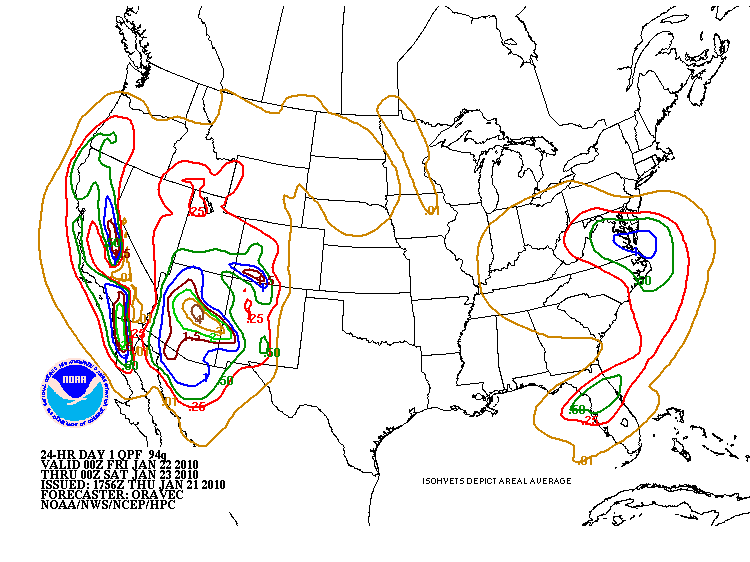
Having carried it, this writer is too, but only to a degree. It gives rain a bad name.
But when wrong news is good news, why gyp? Moreover, there is more good news in a place with such bad zoning that even the best-behaved showers throw the city into chaos.
As reported in The week that was, and repeated here for good measure, last week, the Los Angeles Board of Public Works passed a Low Impact Development Ordinance that will require new construction to retain more rain water on site …
Western datebook: Robert Turner
The photography of Robert Turner will be on exhibit Thursday January 21-Sunday January 24th at the Susan Spiritus Gallery space at the Los Angeles Art Show.

Left, photographed in the Eastern Sierra, Turner’s “Twilight at Mono Lake,” (2000).…
Rain, “strongest winds in over a decade”
A NATIONAL Weather Service statement predicts along with heavy rain for Los Angeles on Wednesday January 20, 2010 “the strongest winds in over a decade.”
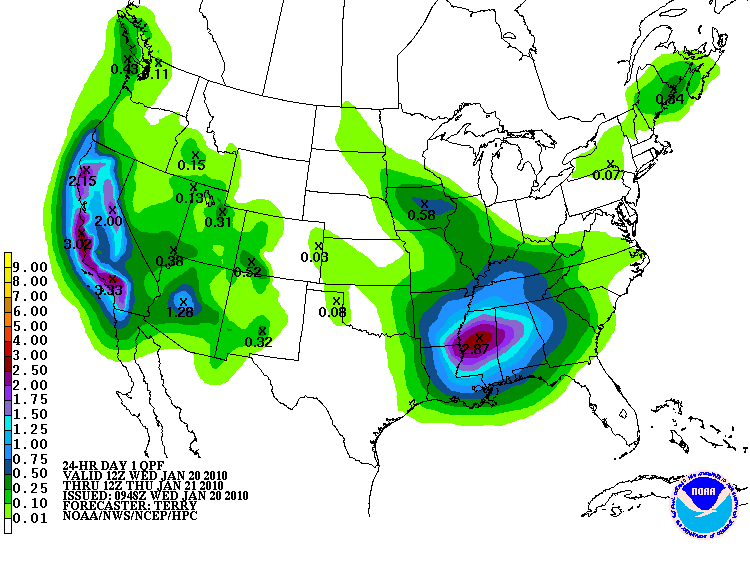
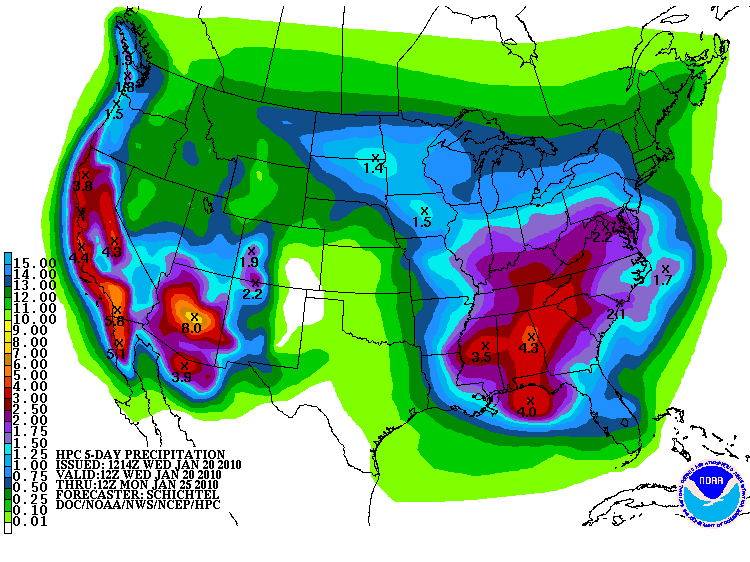
From the report: “The heaviest rainfall will spread into the area between 10 am and 8 pm on Wednesday. Rainfall rates will range from three-quarters of an inch to one inch per hour with local rates up to 1.50 inches per hour across south-facing slopes. Total rainfall accumulations will range from one inch to two inches over coasts and valleys with two to four inches in the mountains. Local amounts up to five inches are possible along south-facing slopes.
With the amount of instability with this system there is a high potential for strong thunderstorms to develop on Wednesday and Wednesday night. Some of the thunderstorms may produce hail, wind gusts in excess of 60 mph and torrential downpours.
Atmospheric conditions will also be favorable …
Lawn’s carbon footprint

Amy Townsend-Small, UC Irvine, co-author of a new study comparing the carbon storage-versus-emission profile of Southern Californian lawns. Photo: Steve Zylius, UC Irvine
Smoking kills and lawn grooming contributes to global warming, reports the American Geophysical Union.
Actually, the AGU press release doesn’t talk about cigarettes, just grass: “Dispelling the notion that urban ‘green’ spaces [read lawn] help counteract greenhouse gas emissions, new research has found — in Southern California at least — that mowing and other lawn maintenance emit much larger amounts of greenhouse gases than the well-tended grass sequesters.
“Turfgrass lawns remove carbon dioxide from the atmosphere through photosynthesis and store it as organic carbon in soil, making them important “carbon sinks.” However, greenhouse gas emissions from fertilizer production, mowing, leaf blowing and other lawn management practices are four times greater than the amount of carbon stored by ornamental grass in parks,” a new study to be …
“Virtually impossible” for monitoring safeguards to work
WILL the monitoring of the groundwater pumping proposed by Las Vegas in the Great Basin safeguard the targeted valleys? “It is virtually impossible,” writes 32-year veteran of the US Geological Survey John D. Bredehoeft in the Salt Lake Tribune. To read the op-ed piece by the country’s presiding authority on groundwater, click here.
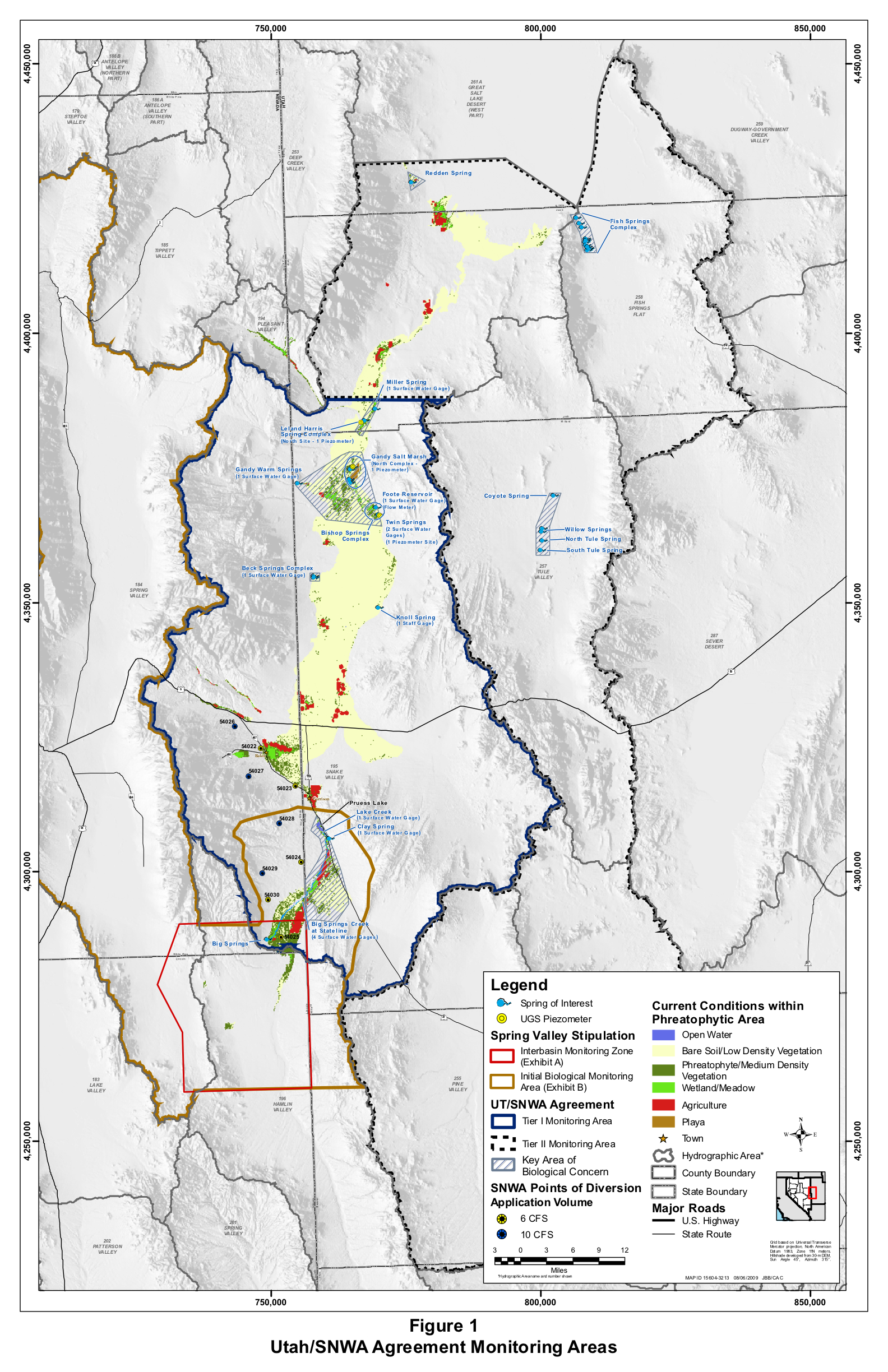
Or for a longer version of the article supplied by Dr Bredehoeft, click here.…
« go back — keep looking »North American Native Plant Societies

After the lawn

Garden blogs
