The common purse: Las Posas / Cadiz
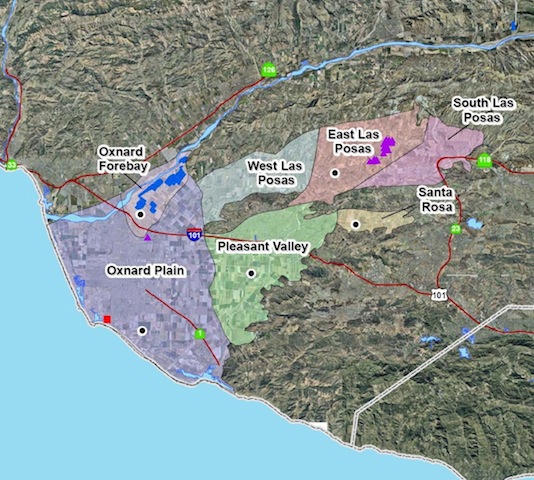
A previous post, Rancho Santa Margarita, Meet Calleguas, hit a hornet’s nest. The decision to write it was little more than an instinct. “Poke there.” The post referred to something called the “Las Posas Basin Aquifer Storage and Recovery Project,” described by the Los Angeles Times during the project’s inception in the 1990s as “the largest reservoir in Ventura County, ensuring a reliable water supply in cities from Simi Valley to Oxnard in the event of drought or earthquake.”
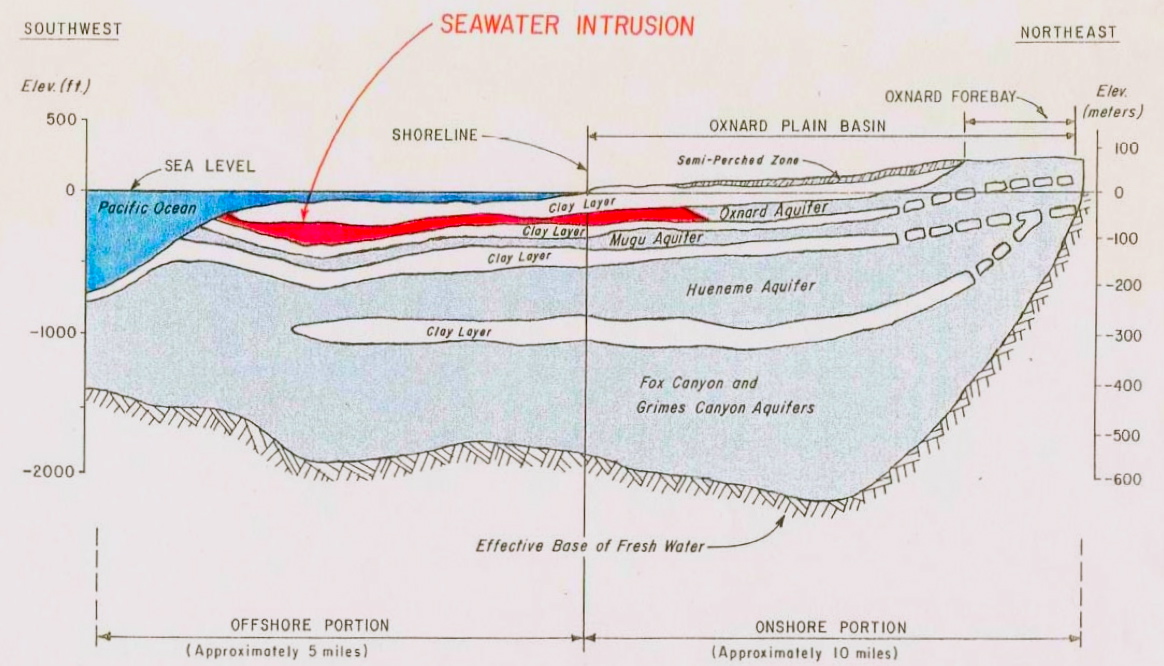
Las Posas wasn’t big. It was bigger. “The $47-million project near Moorpark will hold more water than Lake Casitas and nearly four times what Lake Piru holds,” reported the Times.
Until it didn’t. When last month the Ventura County Reporter recounted that the capacity proved to not be the much-celebrated 300,000 acre feet, but instead 50,000 acre feet, no villain was named. Who needs a villain when, as …
Rancho Santa Margarita, meet Calleguas
UPDATED 5/11/2012: As the board of the Rancho Santa Margarita Water District wades through the Draft Environmental Impact Report produced for them by their partners at Cadiz, Inc in the bid to involve the Orange County municipal water company in a water mining scheme in the Mojave Desert, let us pause to look at some bona fides of a lead Cadiz consultant. Cadiz engineer Terry Foreman would have Rancho Santa Margarita believe that “using 50,000 acre-feet per year is optimal for conservation” from a basin with recharge that is perhaps one tenth of that, and that mining groundwater poses “no long-term impacts to the desert environment.”
Believe that and you’ll believe in chocolate cake diets, so it seems unlikely that anyone involved in the project really cares about the Mojave. Yet when it comes to cost, the Rancho Santa Margarita Water District board of directors …
High good, low bad: Mead in April 2012
In April 2012, Lake Mead fell for the second consecutive month, marking an end to the spoils of the 2010/11 water year and leaving the largest storage reservoir in the West roughly 49 feet from the point where Arizona and Nevada will face shortages.“American Canopy” on the past of U.S. forests
Eric Rutkow has written a fine history on the rapacious chewing up of American forests and subsequent rise of a faltering culture of forestry management.Hot earth day
"Most of the US experienced record or near-record breaking temperatures, contributing to the warmest March since national records began in 1895," reports the National Oceanic and Atmospheric Administration. Click on the map for NOAA's March 2012 global climate analysis. After reading it, if you live in Southern California, Nevada, Arizona etc, what are you waiting for? Rip out your lawn. It will save roughly half of the water you use, the often dirty energy needed to pump that water hundreds of miles from wet places to dry ones, the energy needed to mow the lawn once a week, the air pollution caused by the mowers, and the energy needed to cart away and process the green waste. For support on landscape alternatives, check your local native plant society.
North American Native Plant Societies

After the lawn

Garden blogs
