High good, low bad: Mead in July 2011
Why, you might wonder, would anyone in their right mind use a map highlighting the Mississippi River system for a monthly post about the elevation of the largest reservoir on the Colorado River? The reason is a renewed offer on the table from Las Vegas water manager Pat Mulroy. Divert the Mississippi and its tributaries to feed upper basin Colorado River users, give Vegas the water therefore left in the Colorado River system and she’ll leave the Great Basin aquifer alone. “The instate project wouldn’t be needed because at that point what you’ve done is securitize the Colorado River,” she tells a reporter for “Vegas, Inc.”
This transcontinental flood control scheme isn’t new. Pat’s been braving ribald mockery over it for at least three years now. The “give me more Colorado River water or the Great Basin desert gets it” line isn’t new either — that’s been a …
The Dry Garden: Vertical meadow
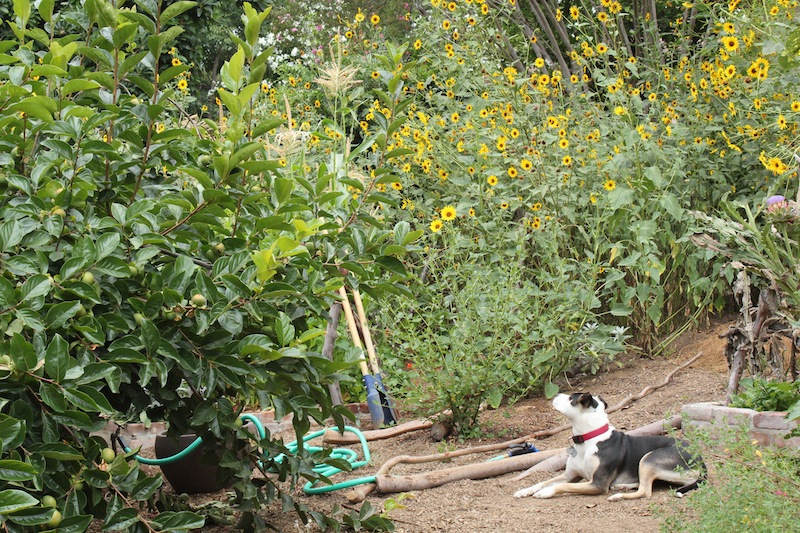
Jasmine Hawes and mother Ginny Hawes (background) kindly posed for scale in this summer's towering sunflower garden, planted as part of a conversion from lawn to a water efficient native garden.
There’s overdoing it, and there’s what I did. After sowing a pound of sunflower seeds last winter, eight months later, the phrase “height of summer” can now be taken literally. In lieu of a front hedge, I have sunflowers. One astounded woman even came to my door asking when and how to plant them. Neighbors call my home “the sunflower house.” Out back, my yard is a vertical meadow.
Click here to keep reading “The Dry Garden” in the Los Angeles Times on how wildflowers can serve as a succession crop when replacing lawn.
Click here to see what’s doing at the Theodore Payne Foundation for Wildflowers and Native Plants, and here for our regional treasure, the Rancho …
The Dry Garden: Summer dormancy
Emily Green, that would be me, is on vacation (read thinning the persimmon tree so the wood doesn’t give way under the weight of a bumper crop), but click here for ten LA Times Dry Garden columns about what to do while a garden enters summer dormancy.…
The Dry Garden: North East Trees
Unless you are active in the field of urban greening, you probably haven’t heard of North East Trees. Unlike the better known TreePeople, North East Trees has not seen its founder land on “The Tonight Show.” Rather, the nonprofit that Scott Wilson started in 1989 by planting 700 oaks at Occidental College in Los Angeles’ community of Eagle Rock has quietly been planting many more trees (50,000 at last count), working with low-income communities to create parks, and partnering with city and county agencies on water-harvesting projects. North East Trees has been at the cutting edge of L.A.’s ecological makeover.

Click here to keep reading about North East Trees in this week’s Dry Garden column in the Los Angeles Times.…
High good, low bad: Mead in June 2011
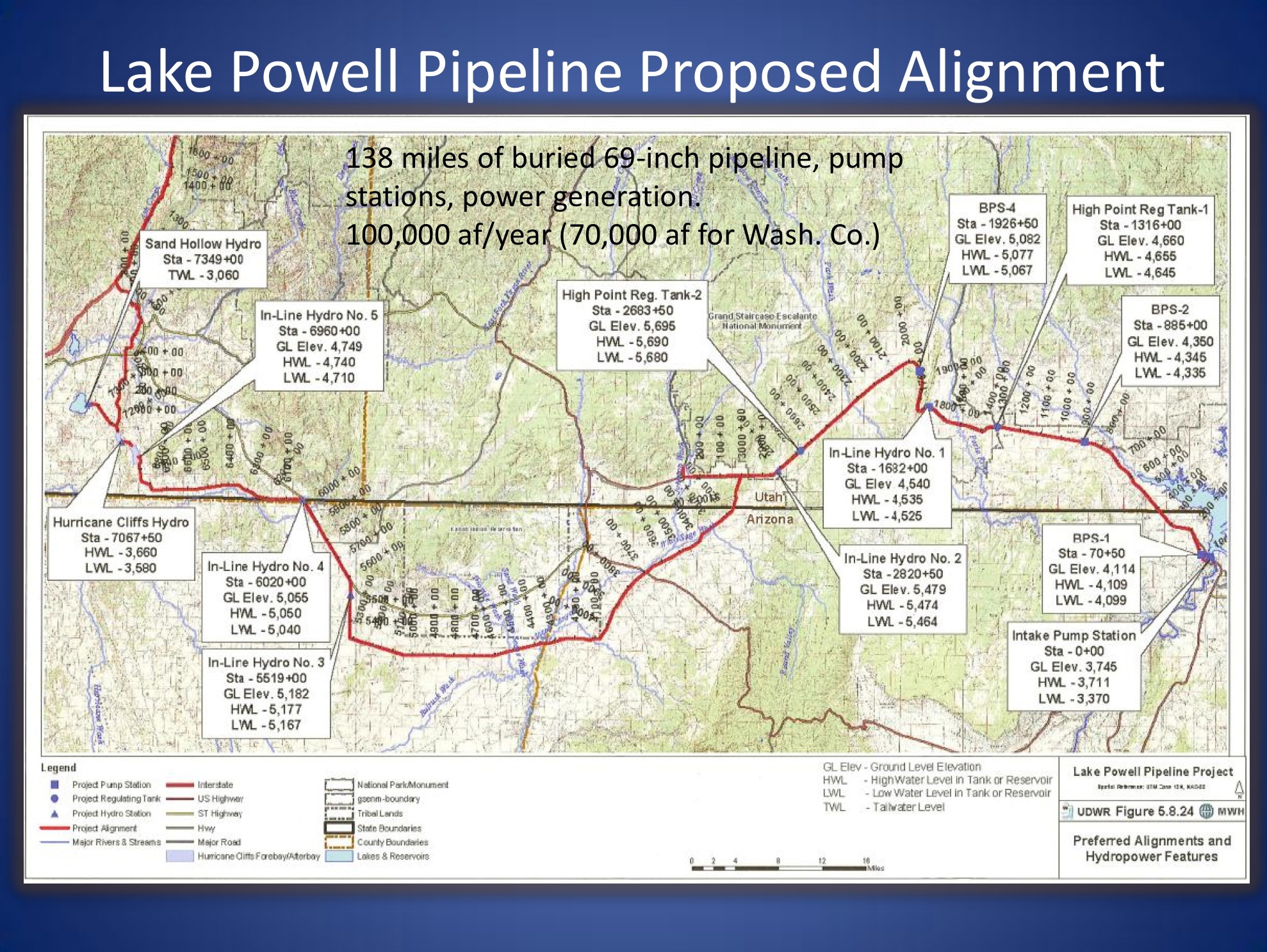
Source: Water Resource Planning in Washington County, Utah and the Lake Powell Pipeline, Presented at the Nevada Water Resource Association meeting February 3, 2011 by Corey Cram of the Washington County Water Conservancy District
Not only is this normally first-of-the-month post about Lake Mead late, it’s not even about Lake Mead. I find that the other great storage reservoir on the Colorado River, Lake Powell, was the more interesting of the big drinks in June. The Salt Lake Tribune found Utah’s Department of Water Resources taking state legislators for a plane ride over Utahn water ways. Whee.
Unlike leaner years, there was plenty of gleaming snowpack to sell any number of projects, not least the patently crazy proposal for a $1.1bn pipeline from Lake Powell into the snowbird communities of Washington County. That stretch of old Mormondom is to the south of the state, along the border of Nevada’s dry …
« go back — keep looking »North American Native Plant Societies

After the lawn

Garden blogs
