The Dry Garden: ‘Sustainable Landscaping for Dummies’
Posted on | December 4, 2009 | No Comments
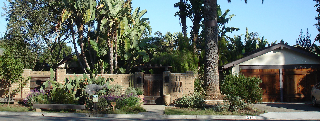
The idea that suburban gardens might be “sustainable” came late to Southern California. Modern Los Angeles was sold on the promise that anything grows. Exotic plants were status symbols. Sunshine was constant, and the only worry about water was finding plants best suited to go next to the swimming pool. More than a century later, the fantasy style is out. Sustainable is in. There’s only one problem. What does sustainable mean?
Landscape architect Owen Dell has cut through the eco-babble to offer not just a definition, but also a how-to book. The Santa Barbara-based author of “Sustainable Landscaping for Dummies,” published by Wiley this year, begins by defining sustainability.
Click here to keep reading this week’s Dry Garden column in the Los Angeles Times.
Flower report
Posted on | December 4, 2009 | No Comments
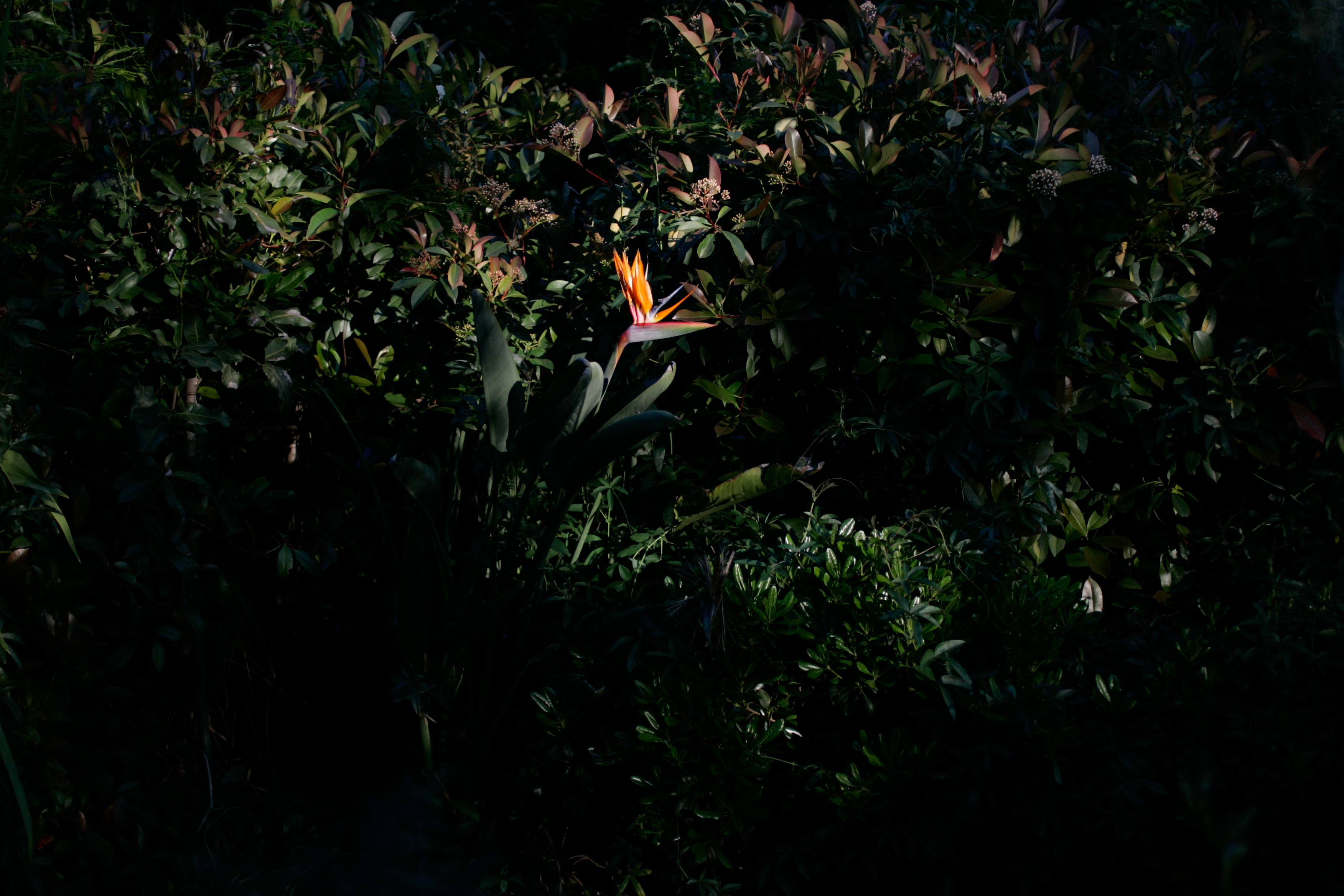
A bird of paradise peeks out of a photinia hedge at dusk. Photo: Annie Wells.
As a particularly handsome crop of fall roses finish and the thick, almost sickening gardenia-notes fade from blossoms drying on the coyote bushes, throughout December, South Africans plants will dominate the flowering cycle in the Californian mediterranean garden. Jade and aloe are entering their winter flourishes, while the bird of paradise remains at constant attention.
Among California natives, be they false starts or early bloomers, some manzanitas are already decked out with delicate bell-shaped flowers and the earliest of the ceanothuses are covered with their signature cobalt blue blossoms. From the Mediterranean, lavender that has been left to adapt to local rainfall cycles will be verging on a vivid fall bloom, with salvia officinalis already in flower.
If you haven’t scattered your wildflower seeds yet, get out in front of the rains this weekend to rake out grassy weeds. Then scatter the seeds as the first drops begin to fall, retreat indoors and hunker down for winter. Throughout December and January, the seedings will seem to skulk, but the action will be going on below ground where they will be building up deep root systems to see them through a long, progressively warm spring.
Rain likely
Posted on | December 3, 2009 | No Comments
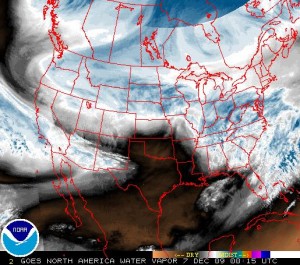
Click on the image to be taken to the satellite image page of the National Weather Service
We in Los Angeles can live in hope that forecasts of rain by Monday are true. To follow the rain, click here. For the best explanation of what the recent State Water Project guarantee of only 5% of normal deliveries for 2010 means, go to Peter Gleick’s column in the San Francisco Chronicle. It’s not as bad as it sounds, he says, but we must prepare for another dry year. For a graphic of reservoir conditions as California enters its rainy season, click here. NOAA image updated 12/06/09, 5.45pm PST.
Tags: chance of rain > Emily Green > Los Angeles > National Oceanic and Atmospheric Administration
Going native
Posted on | December 3, 2009 | 8 Comments
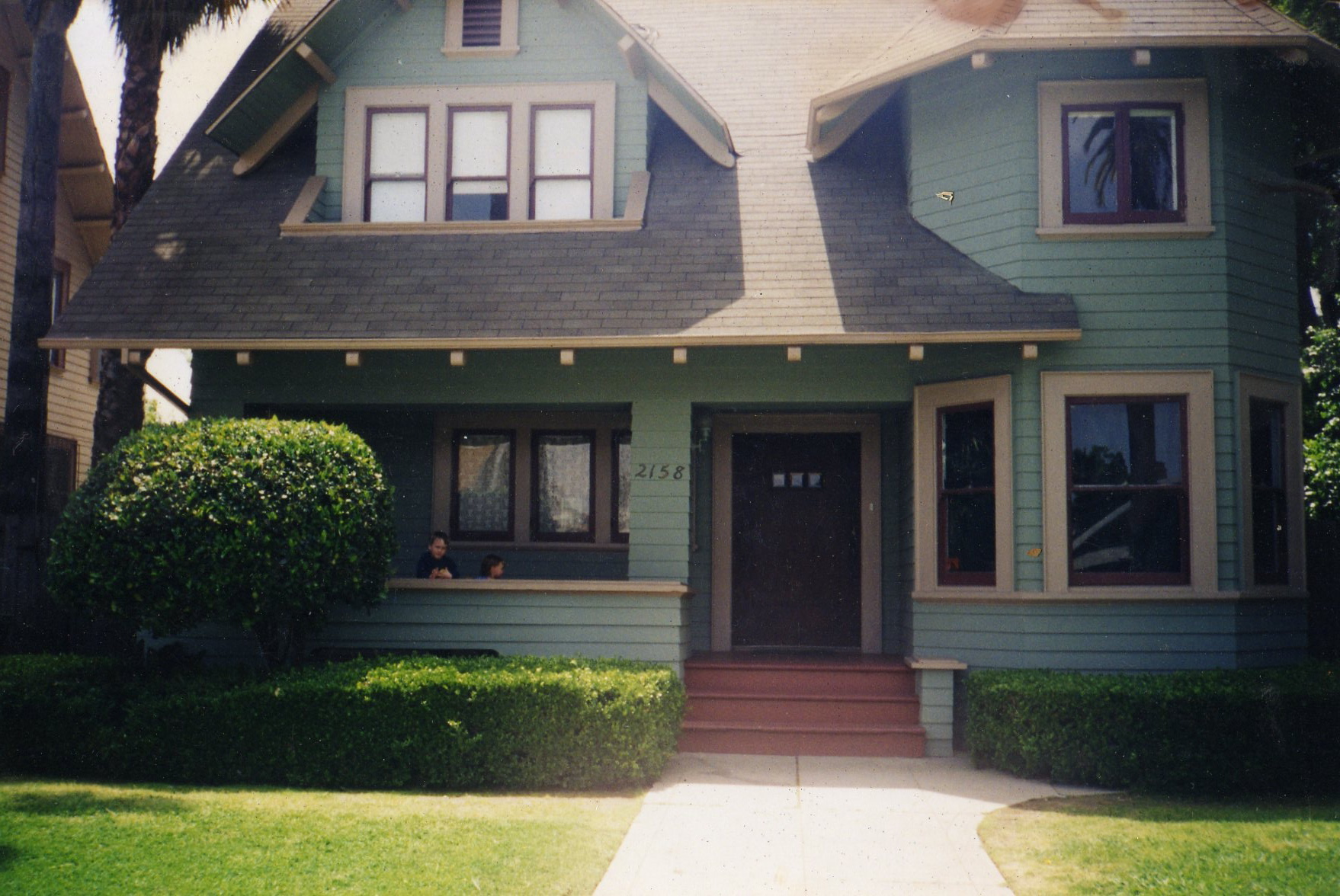
1998: Garden that came with the house
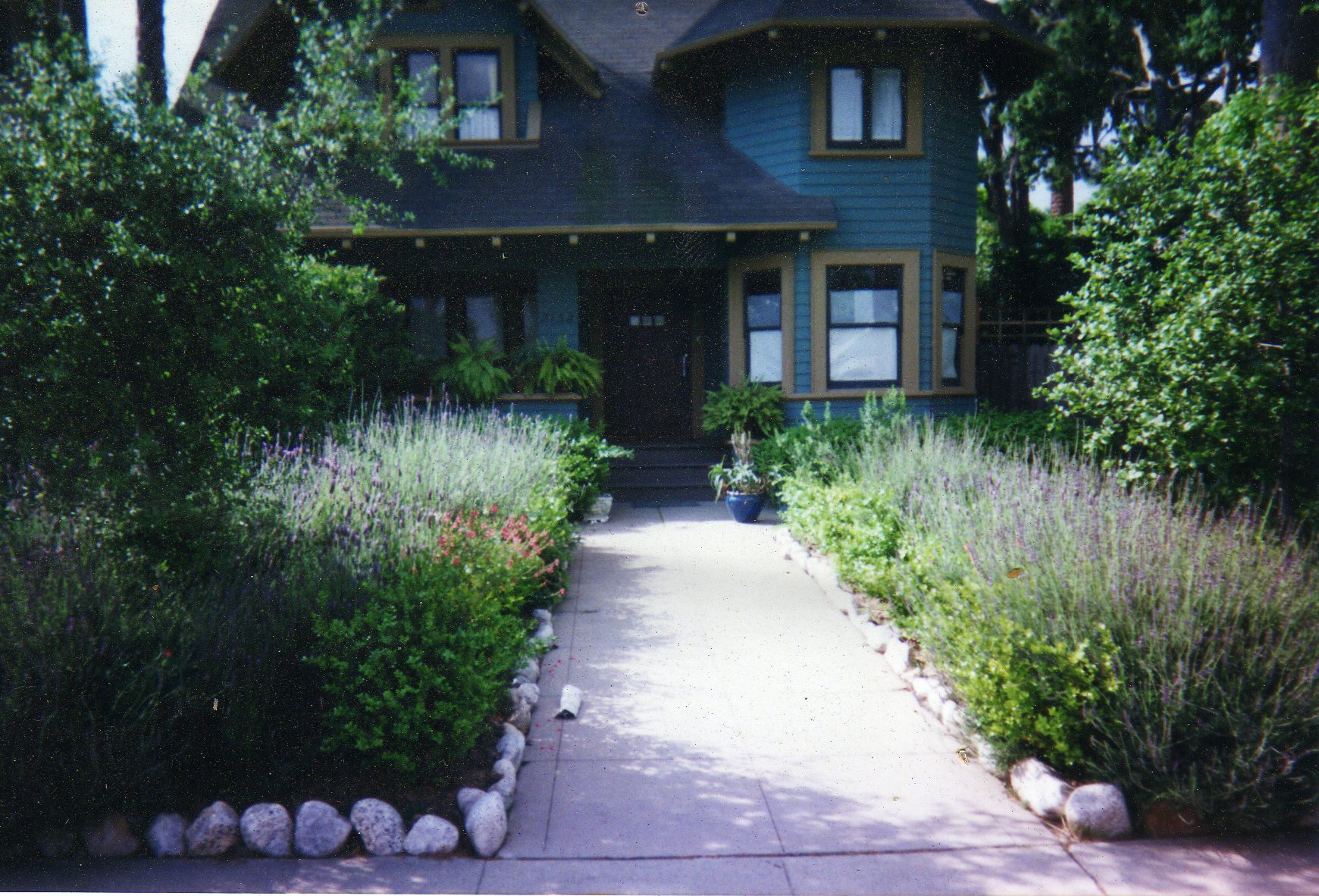
2002: Interim garden with box hedge and lavender around oak saplings
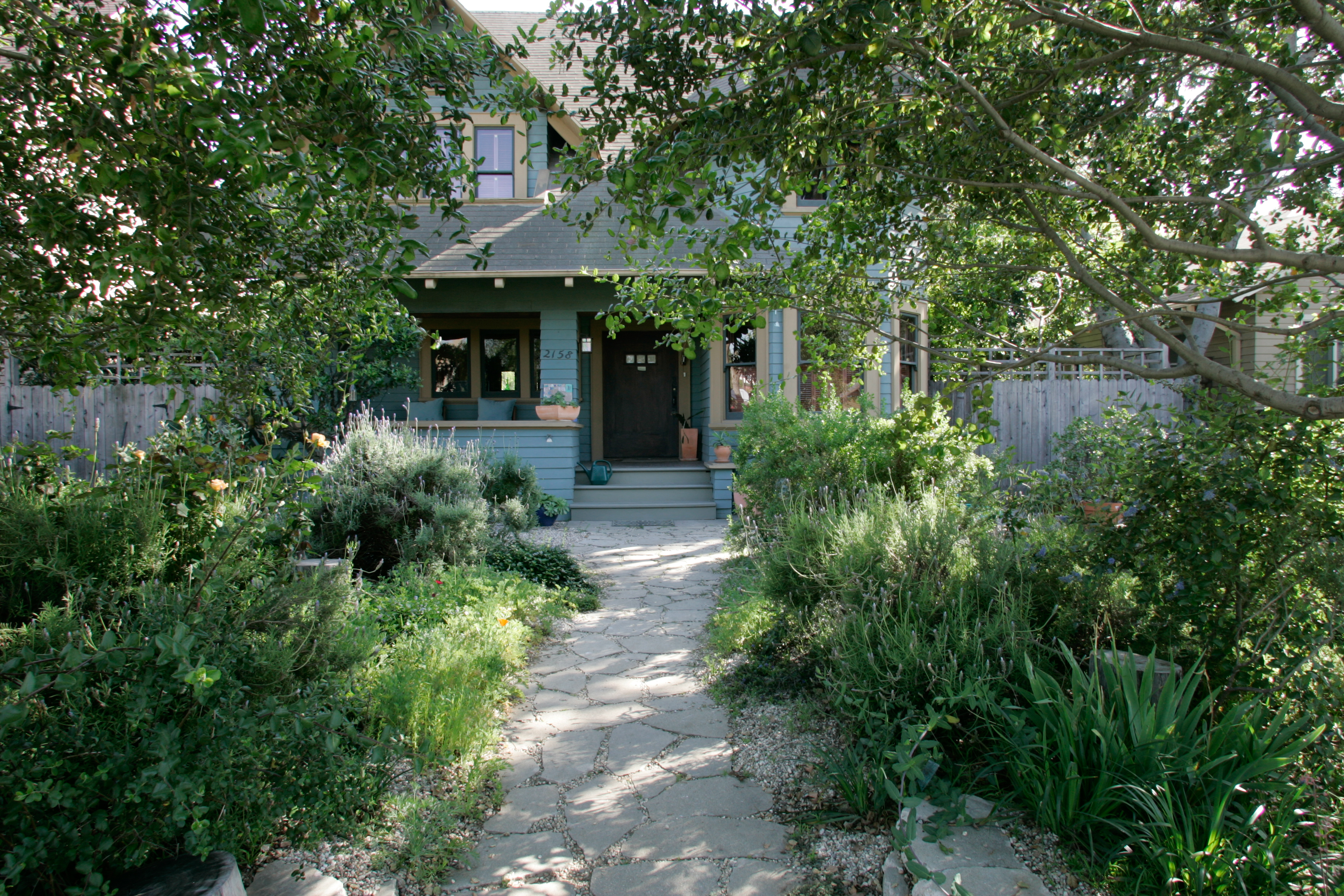
2008: Garden in transition to strongly native with no built-in irrigation and only occasional hose watering. Plants in image: live oaks, irises, lavender, coyote bush, native honeysuckle, ceanothus, poppies and one very hardy tea rose. Paving part of a zero runoff water-capturing design adapted in Los Angeles to City of Santa Monica standards.
Emily Green, publisher of this website and writer of the “Dry Garden” column for the Los Angeles Times, will be speaking on December 8th at the California Native Plant Society on “A Decade of killing plants and learning from the survivors.” Snapshots, left, are examples from the period, from 1998 to 2008, during which Green began chronicling for the Times the transition from conventional to native gardening.
For information, click here.
Tags: California Native Plant Society > chance of rain > Emily Green > Native Gardening
Solar pilot, without impact report, proposed for Owens Valley
Posted on | December 2, 2009 | 2 Comments
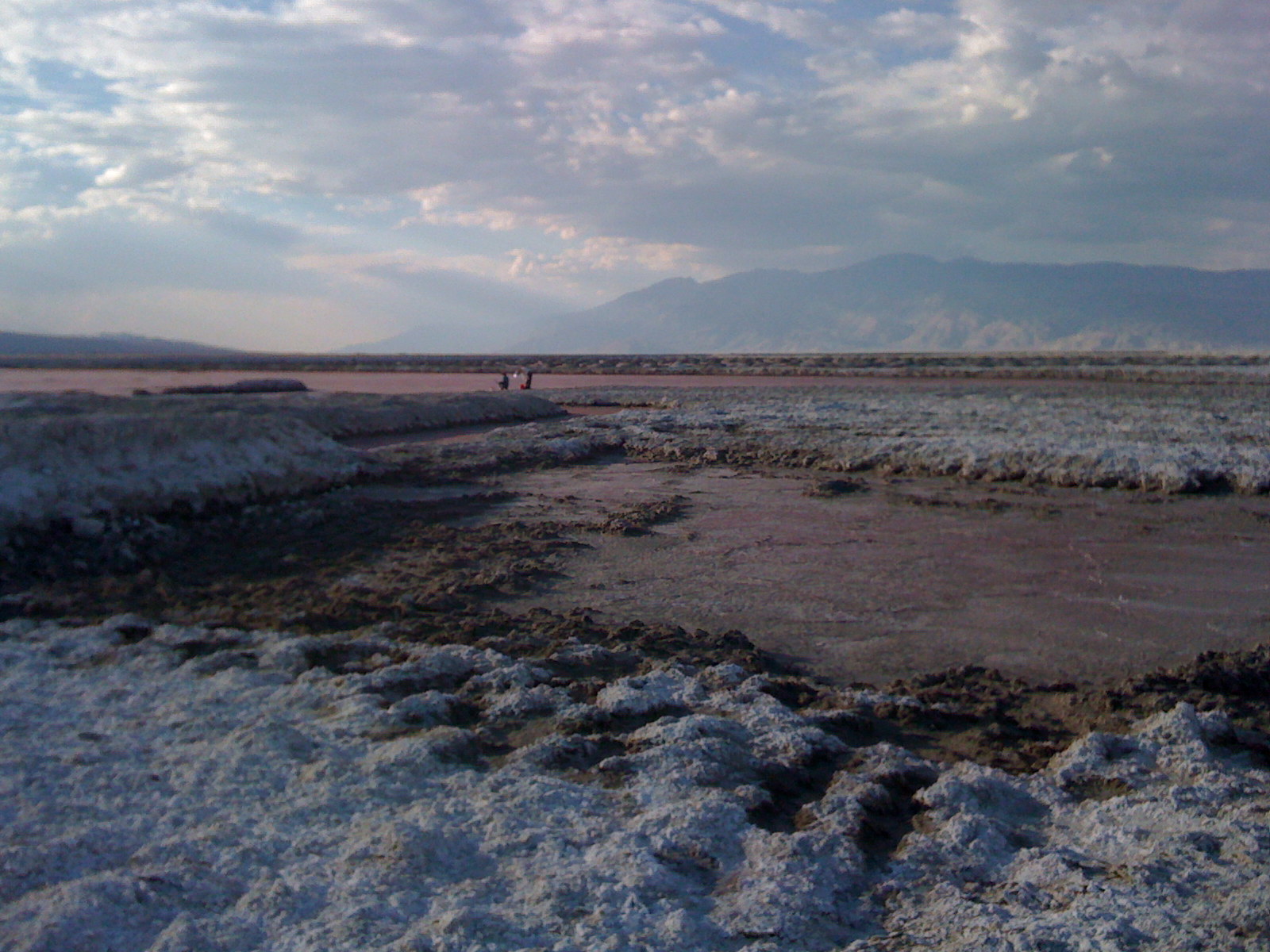 Nearly a century after Los Angeles drained Owens Lake by diverting its water to the Los Angeles Aqueduct, the city now hopes to generate solar energy on the dusty salt flats it left behind, reports Phil Wilson in the Los Angeles Times.
The Department of Water and Power’s board of commissioners Tuesday unanimously approved a renewable energy pilot project that would cover 616 acres of lake bed with solar arrays — a possible precursor to a mammoth solar farm that could cover thousands of acres.
To keep reading, click here.
Tags: chance of rain > Emily Green > Los Angeles Department of Water and Power > solar power
North American Native Plant Societies
After the lawn

Garden blogs
