Let them eat plastic
It only looks like a jelly fish. A sea turtle eats a plastic bag. Source: Heal the Bay. Click on the image to be taken to Heal the Bay.
A “closely watched, first-in-the-nation ban on plastic grocery bags was defeated Tuesday night,” reports the Los Angeles Times. “That measure, AB 1998, passed the Assembly in June and had the support of Gov. Arnold Schwarzenegger, but faced a withering and well-financed advertising and lobbying campaign from the plastic bag manufacturing industry.” To keep reading, click here or, for the AP account, here. “Opposition arguments last night were straight out of Lewis Carroll,” writes a disgusted Heal the Bay president and bill co-sponsor Mark Gold in Spouting Off. To read in the Sacramento Bee how the American Chemistry Council, whose members include Exxon, Dow and plastic bag manufacturers, “unleashed a flurry of fresh donations to politicians and …
September fully loaded
Summer heat is late and fiery days are surely ahead in Southern California, so planting season is still months away. However, the number of courses aimed at helping homeowners and facilities managers convert from lawn to less wasteful landscapes ramps up in September. Book now to attend the Pacific Horticulture Society’s “Gardening under Mediterranean Skies” symposium from September 23-26 in Arcadia or click here for a full calendar of region-wide events. If you have an event to include, please send details to emily.green [@] mac.com.…
The week that was, 8/22-28/2010
Bullets rain on the Swat Valley in a drawing done by one of Feriha Peracha's students school for "Taliban" survivors. August flooding has brought fresh anguish to the already chaotic and deadly region that Peracha remembers as paradisal during her childhood visits. Source: American Public Media's 'The Story.' Click on the drawing to be taken to Dick Gordon's interview with Peracha.
As we remember the tragic delays after Hurricane Katrina hit the Louisiana coast five years ago today, arguably the single most meaningful way that we can mark the anniversary is to help the millions in Pakistan whose livelihoods are being washed away now, who are desperate now.
For a glimpse of the horror being visited on that country by unprecedented monsoonal flooding, and the bewilderment and desperation of the people in the path of the water, there is no better sampling than Dick Gordon’s August 25, 2010 interview with …
The Dry Garden: Pruning sage

Last spring, horticulturist Lili Singer remarked to me that one of the most touching mistakes she sees made by novice dry gardeners is timidity in pruning their sages. And so, in the summer edition of the Theodore Payne Foundation’s Poppy Print newsletter, she nudges native gardening converts to do it.
With thanks to Lili for the push, I am going to echo the prompt in this column in the hope that others may learn to work out their frustrations on their gardens in such a timely fashion.
If it seems late, it isn’t. Only the most ferociously organized gardeners dead-head sage as soon as the flowers fade in June. Watching the flush of flowers drying on the branch through July and August makes for too many sunset grace notes. As Lili notes, birds move in and glean the seeds. Yet by late August, those fluttering elegies to spring just …
Four scenarios for climate change and water
The US Environmental Protection Agency has opened a 45-day public comment period for a draft report looking at impacts of climate change on the water supplies of four American urban regions: the Bay Area in Northern California, Seattle in the Pacific Northwest, New York City in the Northeast and Spartansburg in upstate South Carolina. Climate Change Vulnerability Assessments: Four Case Studies of Water Utility Practices was prepared by the National Center for Environmental Assessment’s Global Climate Research Staff, formerly known as the Tortuous Title Division of Guess Whether or Not it’s a Quango. As it is a draft, the agency requests that readers not cite or quote the content. However, it does welcome feedback. Consider mine given on the title and name of the author. Click here for the EPA’s main climate change page.…
« go back — keep looking »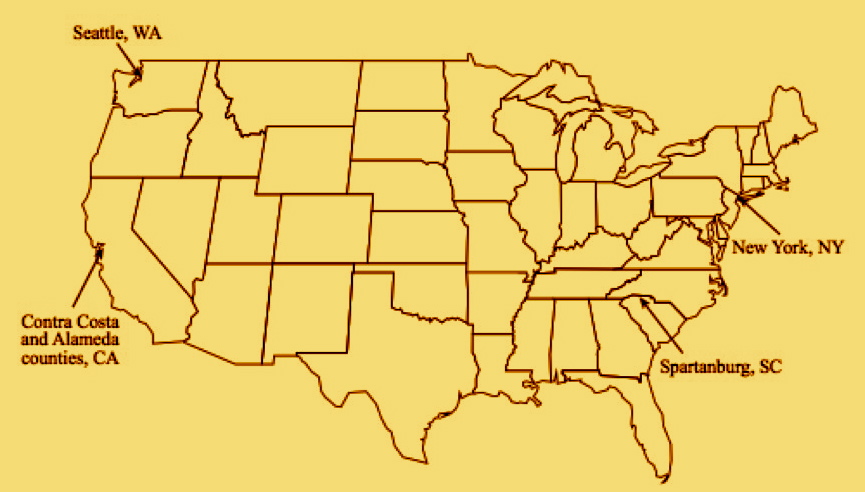
North American Native Plant Societies
After the lawn

Garden blogs
