Floyd Dominy, 1909-2010
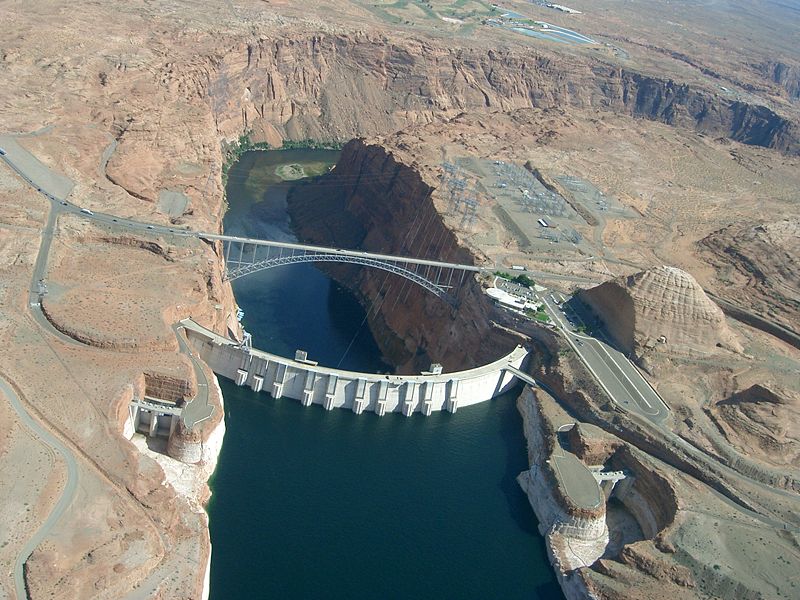
Click on the photo of Glen Canyon Dam to enlarge the image, or click on the Dominy napkin sketch of the same thing for a beautiful account of a 1997 dinner at the former Reclamation commissioner's home by Glen Canyon Institute president Richard Ingebretsen. "We met at his house in the afternoon. On his several acre property were over one dozen dams; he is a beaver to be sure," Ingebretsen wrote.
“Floyd Dominy, who made it his mission to improve nature by, among other things, damming the Colorado River at Glen Canyon and creating the more user-friendly Lake Powell, has died at the age of 100,” reports the High Country News.
“Some had hoped that Glen Canyon Dam would go first … ” To keep reading click here.
…The Dry Garden: A novel place
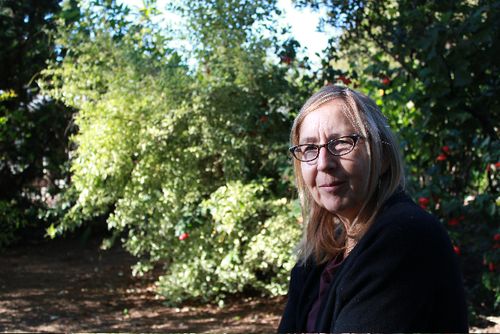
Read the novel “Blame” and it comes as no surprise that author Michelle Huneven gardens, or that she is Southern Californian. There is no inventing the familiarity in the descriptions of buckwheat “drying to a dark iron red,” the hurl-me weight after a rain of a clump of freshly pulled long grass, or how wildfire embers fly “like fat, radiant insects.”
The surprise comes on seeing her foothill garden for the first time, and realizing that such an overwhelmingly sensuous world is so accessible — that we all could all fill the land around our homes with scents, textures, flowers, fruit and vegetables if only we gave up lawn. Click here to keep reading The Dry Garden interview with Michelle Huneven in the Los Angeles Times.
And click here for information about this Sunday’s Mar Vista tour of 80 gardens that have all forsaken turf for food and …
Glen Canyon Dam and the pill from MIT
This one is strictly for water wonks. Now that I’ve cleared the room, Richard Spotts of the Great Basin Water Network alerted me to this paper from the Columbia Journal of Environmental Law. “Collaborative Planning and Adaptive Management in Glen Canyon: A Cautionary Tale” looks at the impact of changing environmental regulation on the operations of the second largest dam on the Colorado River. It then wades through the on-going efforts to resolve the succession of shit storms that followed the 1956 construction of Glen Canyon Dam.
The authors, two from the Massachusetts Institute of Technology, the third from the University of California, Irvine write, “The Glen Canyon Dam Adaptive Management Program should not be considered a success because it has failed to address effectively the concerns that led to its creation in the first place, including: (1) developing a stakeholder-supported operating plan responsive to increased understanding; (2) …
From turf to teaching campus
The Natural History Museum of Los Angeles County today unveiled plans to convert former lawn into a 3.5 acre living wilderness exhibit. According to the press release, eleven thematic zones—Urban Edge, Transition Garden, Car Park, Living Wall, Entrance Plaza, Urban Wilderness, Pollinator Garden, Shadow Garden, Get Dirty Zone, Home Garden and 1913 Garden—will be interwoven with landscape features such as a pond and dry creek, groves of trees, and walking paths. Click here for more information on the gardens, which are expected to open next year.
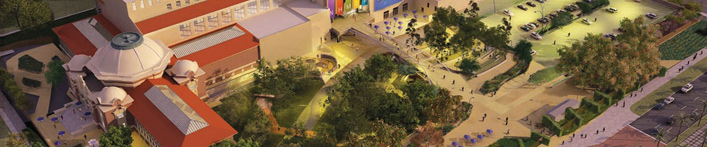

The pond is one of the North Campus’ centerpieces, where visitors and school groups can engage in living habitat filled with animals ranging from Western Pond Turtles to dragonflies. Rendering by Mia Lehrer + Associates. Courtesy of the Natural History Museum of Los Angeles County.
Phantom boxing with faceless bureaucrats
The Los Angeles Times reports today that the Mayor is lashing out at “unidentified high-level bureaucrats” within the city’s Department of Water and Power.

It is these mandarin civil servants, we are to believe, who are to blame for thwarting reform, for the mixed messaging about our City finances and for failure of clean energy initiatives.
Did he mention how they run around at night and purposefully cause water main breaks?…
« go back — keep looking »North American Native Plant Societies

After the lawn

Garden blogs
