The Dry Garden: A shear education
One of the first things that I wanted to do in my new garden last year was to cut down the persimmon tree at the center of the large backyard. As early rains stripped the last of the leaves from its limbs and crows pecked at a few fruit, it looked less like a tree and more like an accident scene. Had the person who pruned its tangle of stumped and crossed limbs been a maniac? A gaping crack where the main branches met the trunk looked like it had been smote from heaven.
Only catching sight of its last fall leaves at twilight stopped me. A year later, restoring that wounded tree has become one of my passions. After scant fruit last year, this fall the tree — perhaps 10 feet tall and 12 feet wide — has produced so much fruit that I’ve called in friends and told …
The Dry Garden: Empathy for the underground
To learn more about why poisoning gophers is to kill indiscriminately, click on this graphic by UCLA Environmental Studies student Christine Danner to be taken to the site Urban Carnivores.
Plant ecologist Paula Schiffman came to praise gophers when she packed a lecture last spring hosted by the Los Angeles chapter of the California Native Plant Society. It was awkward for the Cal State Northridge professor, given that most of the audience filling a cold, no-frills Santa Monica meeting room had come to learn how to kill the animals.
The atmosphere only got colder as Schiffman’s live-and-let-live message began to sink in: Gophers were here before us, they are integral to our local ecology, and one of the most common ways that we kill them also can accidentally poison a whole host of other animals.
Click here to keep reading The Dry Garden’s “Detente with the gopher” …
The Dry Garden: Especially everything
Last winter the Los Angeles County Arboretum and Botanic Garden asked what we the public wanted from it. The arboretum held workshops and even hired a professional to run up an online questionnaire. Last month, it published a summary of our responses.
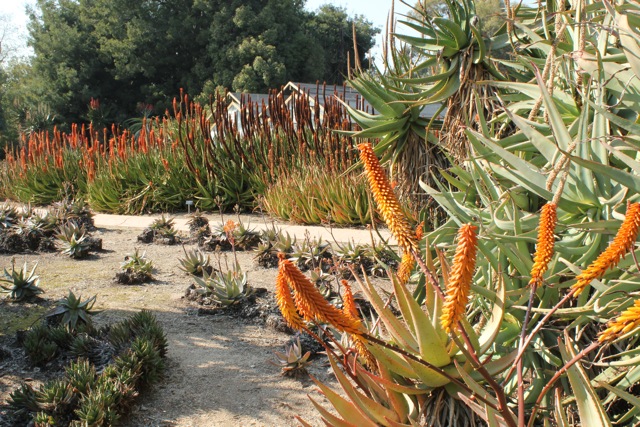
This much can be said about us: We’re not picky. We want everything. According to the new strategic plan, we want a prettier entrance, better signs and more fabulous gift shop. We want to save water and to celebrate the existing water-glugging collection of plants, while perhaps “de-accessioning” a few old soldiers. We want to emphasize food plants for kids and to preserve a lovely collection of native oaks up the knoll. We want a first-class library with the right kind of onramp to the information superhighway. Did we mention we want invasive plants contained? We do. We also want spiffo management and a fine-tuning of …
The Dry Garden: Being John Goodman
Left to their own devices, these newly planted New Zealand flaxes, called Phormium 'Sea Jade,' would each reach five feet in diameter -- fast. They've been put in a new public garden one-foot-on-center to create a quick sense of fill. Nurseries and landscape designers take the praise and money and then run. The facilities manager who inherits this garden, or the homeowner who innocently emulates it, will be left with an ensuing maintenance nightmare.
The single hardest thing to remember in fall planting season is restraint. After summer dormancy, everything looks so fresh. Salvias are pushing out their autumn blooms. We gardeners are full of pent-up expectation. Everything feels possible! Many things are. Keep that elation. Just resist the urge to crowd young plants during installation, a temptation so strong that almost everyone does it.
The problem may be that we treat young plants like babies, which in some ways …
The Dry Garden: In search of a ‘water ethic’ for America
Most high-level arguments about how to conserve water in the garden take place without involving home gardeners. Rather, as water managers weigh what an imaginary average consumer would and would not do by way of conservation, we real-life consumers are alternately offered carrots in the form of ephemeral rebate programs and sticks in the form of emergency sprinkler ordinances.
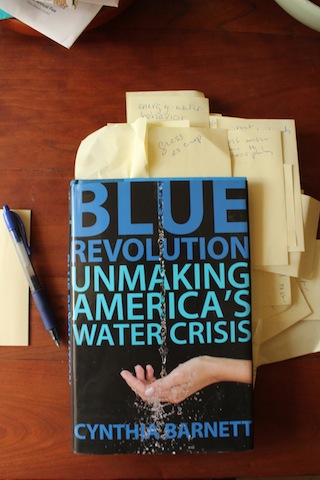
The new book, “Blue Revolution: Unmaking America’s Water Crisis,” knocks this tired see-saw off its axis. Author Cynthia Barnett argues that no conservation program will truly succeed unless embraced by the public as part of a universally adopted “water ethic.” After research took her across the US, to the Netherlands, Singapore and Australia, Barnett concluded that the only way that a water ethic can be reintroduced to places that have lost it is if a primal sense of the importance and beauty of water is restored.
It’s unorthodox to …
« go back — keep looking »North American Native Plant Societies
After the lawn

Garden blogs
