Boxall back on the beat
Posted on | February 22, 2010 | 3 Comments
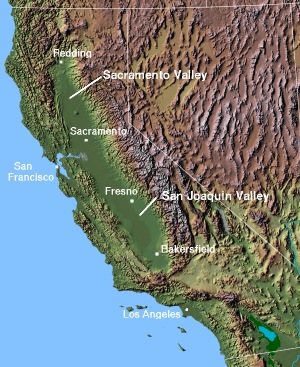 Southern California has had a series of dry years in good water reporting. Far and away the best journalist on the beat, the Los Angeles Times’ Pulitzer-prize winning Bettina Boxall, appears to have been be largely sidelined from day-to-day news gathering while on a “project” — rumor has it that it’s a big read on water. But when Boxall deigns to break from what the Times calls “literary journalism” to do a daily story, pay attention. Something important has spurred her into action. This is the case today as she takes the mainstream media into reporting that the best of the water blogs* have been doing for some time, ie: Testing claims by Senator Dianne Feinstein and Congressman Jim Costa that federal protections for endangered fish in the Sacramento-San Joaquin River Delta are behind an employment/food production catastrophe in the Central Valley.
“In Fresno County, the state’s top-producing agricultural county, the number of farm jobs rose slightly last year,” she writes. “Department figures show farm employment has increased statewide since 2006 — a year of bountiful water supplies in the valley — and dipped only slightly between 2008 and 2009. Growers of major crops such as rice and processing tomatoes enjoyed a bumper year in 2009. Grape production was down slightly, but still among the highest on record. And though photographs of farmers bulldozing their almond groves for lack of water were a media favorite, California had more acres of bearing almond trees last year than ever before.”
To keep reading Boxall’s report, click here. For continuous coverage of the political dogfight over the proposed lifting of Endangered Species Act protections for Delta fish to send more water to farmers on the west side of the San Joaquin Valley in Congressman Costa’s district, go to Aquafornia, the news feed of the Water Education Foundation. *On the Public Record is a personal favorite blog, but those averse to swearing should be warned that its editor is not. This post was updated shortly after posting to add the link (and to give credit) to OtPR.
The week that was 2/14-20/2010
Posted on | February 21, 2010 | No Comments
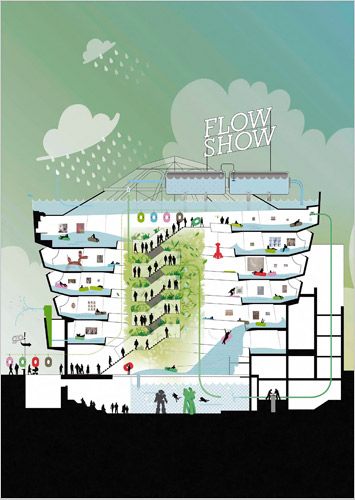
“The form works with the function,” Amale Andros, a principal with the architectural design firm WORKac, told the New York Times last week when explaining a whimsical schematic envisioning the Guggenheim Museum as a water park. The drawing is part of "Contemplating the Void: Interventions in the Guggenheim Museum," a publicity stunt celebrating the 50th anniversary of the museum. Click on the water tower to read the short interview with Andros and her WORKac partner Dan Wood.
“America’s biggest drinking problem isn’t alcohol: It’s lawn watering.” — Amy Vickers quoted in “Turf Wars,” Peter Gleick’s City Brights, San Francisco Chronicle, February 20, 2010
“I don’t believe the economic recovery of the state of Washington relies on cigarettes, candy, gum, bottled water and pop.” — Washington Governor Chris Gregoire on suggested tax increases that, among other things, would levy a penny an ounce on bottled water, “Gregoire proposes new taxes,” Seattle Times, February 17, 2010
Caracas and its surrounding areas have a reserve cushion of 370 days … — Alejandro Hitcher, Venezuelan environment minister and head of the state-run water utility Hidrocapital, “Venezuela to punish profligate water consumption,” EFE News Service, Madrid, February 17, 2010, link from the Latin American Herald Tribune
The Dry Garden: Landmark book for California
Posted on | February 19, 2010 | No Comments
 Until now, there was always one sure way to tell whether or not you had hired the right landscape designer or architect for a job in California. The right one had a copy of Bob Perry’s 1992 book “Landscape Plants for Western Regions,” which was used so often that it occupied the passenger seat of his or her truck. That criterion changed this week. After eighteen years, Perry has finally produced a successor volume: “Landscape Plants for California Gardens.” For those of you worried about how to comply with the water budgets prescribed in last year’s Assembly Bill 1881, Perry gives the evapotranspiration rates not just for thousands of plants, but also correlates them for every California climate zone. He looks at water efficiency of irrigation systems. And, the reason landscapers loved him, after grouping plants by palette, he conclusively links those palette groups back to their water budgets.
“Landscape Plants for California Gardens” is what the Sunset books would be if they focussed on California and were written by a man who is both a licensed landscape architect and a professor emeritus of landscape architecture at Cal Poly Pomona. To see samples of the book, or purchase it, go to Perry’s website. Perry will be making one of his rare public appearances tomorrow at the Theodore Payne Foundation in Sun Valley. For a profile of Perry and more on the new book, click here to go to this week’s “The Dry Garden” column in the Los Angeles Times.
This post has been updated.
Tags: AB 1881 > Bob Perry > chance of rain > Garden Design
West coast House call for salmon
Posted on | February 18, 2010 | 1 Comment
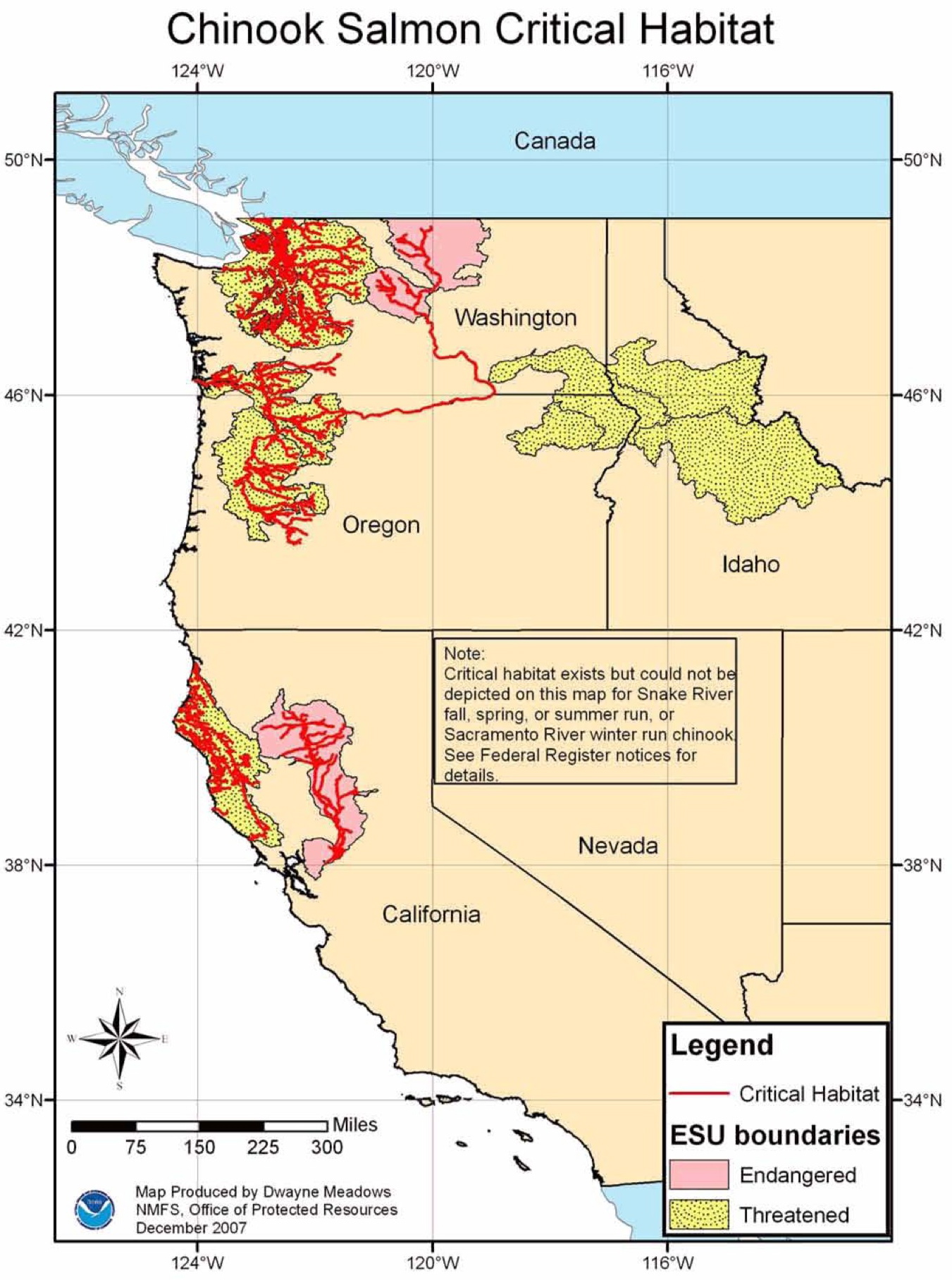 UPDATED 2/20/2010 Eleven Pacific-region congressmen and women have joined Los Angeles Representative Grace Napolitano in writing California Senator Dianne Feinstein asking her to withdraw her proposed rider to a pending jobs bill that could quadruple Bay-Delta water deliveries to powerful farm interests on the west side of the San Joaquin Valley. The House group, several of them members of the Subcommittee on Water and Power chaired by Napolitano, wrote on the grounds that the Delta water exports demanded by Feinstein risk annihilation of the Pacific salmon fishery and at the same time could up-end years of hard-fought negotiations to produce pending water reform legislation in California.
To read the text from Reps. George Miller (D-CA), Peter DeFazio (D-OR), Mike Thompson (D-CA), Zoe Lofgren (D-CA), David Wu (D-OR), Norm Dicks (D-WA), Earl Blumenauer (D-OR), Lynn Woolsey (D-CA), Kurt Schrader (D-OR), Doris Matsui (D-CA), and John Garamendi (D-CA), click here.
Feinstein responds to critics, if not their criticisms, in today’s San Francisco Chronicle.
UPDATE Friday February 19, 2010: In response to pressure from House Democrats, Feinstein may withdraw her controversial rider, though corporate backers from the Westlands Water District are still counting on extra water from their powerful senate ally, reports the Fresno Bee. The Contra Costa Times has Feinstein writing a “Dear George” letter to Representative George Miller, lead author of the Congressional protest. Aquafornia has the full Pacific salmon storm, plus reports of rain.
UPDATE Saturday February 20, 2010: Mike Taugher of the Contra Costa Times asks if Senator Feinstein gets the water that she seeks, might it not ultimately come from a state-controlled system that serves Southern Californian cities? And what does this mean for state environmental standards? To keep reading, click here.
Irritable noun syndrome
Posted on | February 18, 2010 | 4 Comments
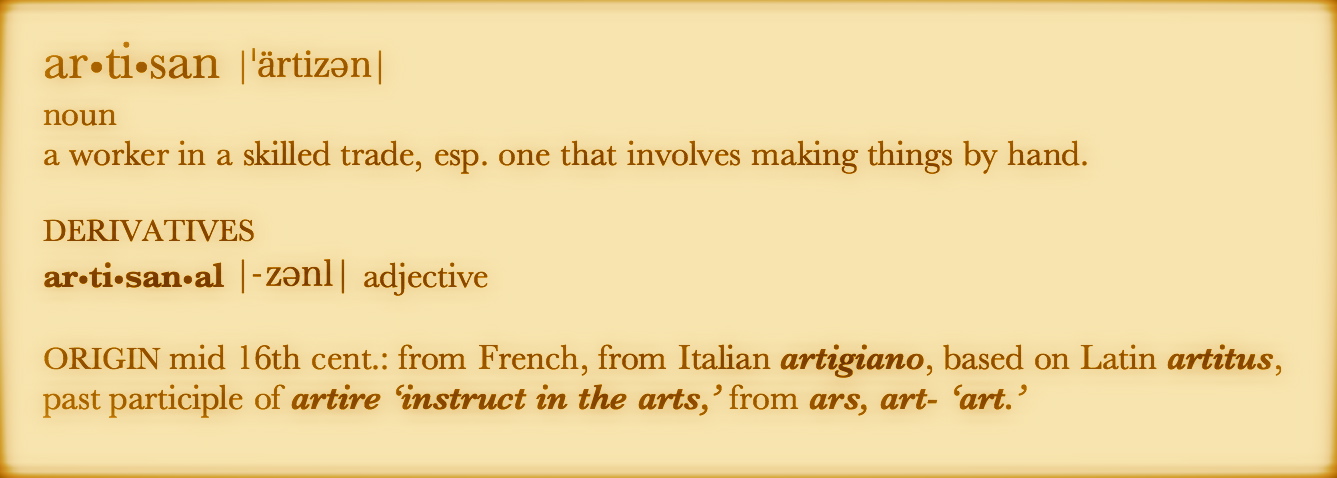 Long ago and far away, people who possessed a valuable skill were called artisans. They formed craft guilds that set standards. We owe French bread and English furniture to their traditions. However, the term has gained a new meaning in American English, one that should serve as a cue to hide your cash, put away your checkbook and forget where you put the credit cards. It does not mean that the vendor using it has emerged from a long apprenticeship to become a butcher, baker or candlestick maker. It means that he or she is a pretentious boob. If it’s a cheese they’re selling, read Drop Out Who Bought a Few Goats. If it’s a restaurant name, read Chef Does Coke. If it’s a garden design service, read Socialite Service Charging $50 an Hour to Deadhead Lavender and Paying the Labor a Fraction of That.
The one thing that “artisan” does not connote in the modern US is skill. Since it was a particularly absurd usage of the term by a Los Angeles garden design firm that inspired this bout of irritable noun syndrome, a note about gardening: If you’re lucky enough to have a garden and time to spend it it, you will know that gardening is a skill, it is an art, it is a science and it can become the great love of one’s life. But the only thing that Los Angeles has to “artisan” standards in horticulture is mow and blow teams. It takes skill to operate the loud, noisy and dangerous machinery needed to groom 10 lawns in a day. Maybe the guys should put “artisan” on their trucks, except that they’re neither pretentious nor venal enough to need the term.
« go back — keep looking »North American Native Plant Societies

After the lawn

Garden blogs
