She says Mulroy, Reisner said Mulwray
Posted on | October 6, 2009 | No Comments

Patricia Mulroy. Photo: Sam Morris / Las Vegas Sun. Click on the image to be taken to Morris's portrait.
WHEN Marc Reisner updated his landmark book Cadillac Desert in 1992, he mistakenly referred to the “forceful woman” who heads the Las Vegas-based Southern Nevada Water Authority as Patricia Mulwray. Her name is actually Patricia Mulroy.
Reisner’s mistake might have been a Freudian slip: Hollis Mulwray is a character in the movie Chinatown who is based on William Mulholland, the powerful founder of the Los Angeles Department of Water and Power.
To keep reading Matt Jenkins’ update in the High Country News on Patricia Mulroy’s plan to siphon the water from the foot of the Great Basin National Park to Las Vegas, click here.
Tags: chance of rain > Emily Green > Patricia Mulroy > Southern Nevada Water Authority
The Dry Garden: Carol’s list
Posted on | October 6, 2009 | 1 Comment
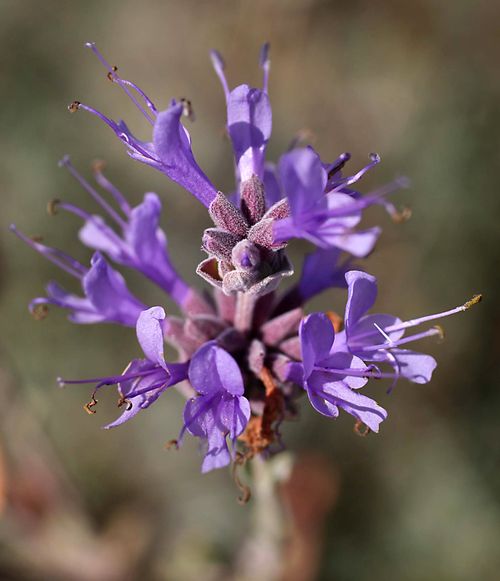
Salvia clevelandii. Photo: Sean Masterson / For the Los Angeles Times
AT A packed hall of the Los Angeles County Arboretum & Botanic Garden last week, horticulturist Carol Bornstein was asked by assembled Southern Californian park keepers how native plants would do in landscapes irrigated by reclaimed water.
To read what the author of “California Native Plants for the Garden” advised in this week’s Dry Garden column in the Los Angeles Times, click here.
For information on how to attend Bornstein’s presentation on the sensory impact of native plants this Thursday night (October 8th) at the Southern California Horticultural Society meeting, click here and here for her October 15th talk on the same subject at the Solvang public library.
This is not a spider
Posted on | October 5, 2009 | No Comments
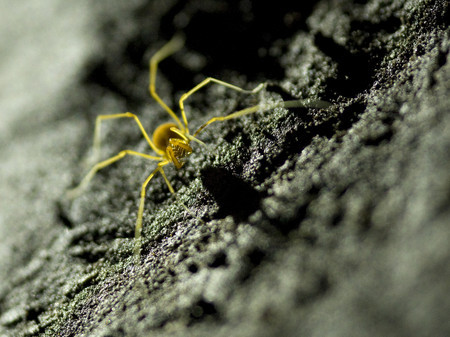
Its legs are too long. It's a Model Cave Harvestman, or very rare daddy long legs, which is unique to the Great Basin National Park, where discoveries of new life-forms could stand in the way of a controversial groundwater pumping plan by Las Vegas. Photo: John Locher / Las Vegas Review-Journal. Click on the Harvestman to be taken to more photos by Locher and to read about an underground tour of Nevada's only national park by environment reporter Henry Brean in Sunday's Review-Journal. Thanks to John Fleck of the Albuquerque Journal and jfleck at inkstain for catching this deliciously creepy and wondrous story out of Las Vegas.
Tags: chance of rain > Great Basin National Park > Henry Brean > Las Vegas
The Los Angeles Aqueduct, explained
Posted on | October 5, 2009 | 2 Comments

Click here for further resources for Southern California teachers
The week that was, 9/27-10/03/2009
Posted on | October 4, 2009 | 2 Comments

T*H*E triptych is vast; it’s over 40 feet long when you take the three paintings together. And it is part of an effort by Monet to make a work, and in fact a whole set of works, that surround the viewer with water — with the view of water, the surface of the water, the reflection of the clouds on the water, the lily pads and, at the edges, the shadows of the weeping willow trees by the edge of the water. — amNew York, Sept 29, 2009 on “Monet’s Water Lilies” at the Museum of Modern Art through April 12, 2010
“I applaud Secretary Salazar and the Obama administration for calling upon the National Academy of Sciences for an independent review of the biological studies that put a tiny fish over hard-working Californians,” said Schwarzenegger, ignoring the fact that the studies also address salmon and killer whales. – Contra Costa Times, Sept 30, 2009
“Just get it done as fast as we can.” — US Senator Dianne Feinstein, (D-CA), on her desire to waive the Endangered Species Act to to speed water to Central Valley farmers, San Francisco Chronicle, October 1, 2009
Stupid small fish! Part of the stupid food chain! Small things should never be preserved. You want to save the whales, kill the plankton and the krill and the whales will have more room! — Jon Stewart, the Daily Show, “Where the riled things are,” September 29, 2009
The federal government must compensate two regional water authorities for water diverted to preserve the environment, a federal appeals court ruled this week in a landmark decision that could open the floodgates for agencies who contend the government is taking water from them for fish — Contra Costa Times, October 2, 2009
Click here to keep reading The week that was
North American Native Plant Societies

After the lawn

Garden blogs
