Book review: “We have met the Enemy”
Posted on | January 17, 2011 | No Comments
 Daniel Akst borrowed his new book’s title from “Pogo” creator Walt Kelly, whose “We have met the enemy and he is us” became a slogan marking the first Earth Day in 1970. However, in “We Have Met the Enemy: Self-Control in an Age of Excess,” Akst isn’t interested in saving the planet, at least as a first line of business. He’s intrigued by impulse control in America, what is eroding it and what that means.
The book opens much like a tract on obesity from the Morbidity and Mortality Report if it had been written by a social commentator and not clinicians from the Centers for Disease Control and Prevention. An anecdote about a corpse too fat to fit in a morgue freezer is followed in short order by the unsparing observation that an obese bariatric nurse at a Texas conference helped herself to a second plate of waffles smeared with cream cheese.
Akst, a former Times editor and writer who proclaims himself to be slender and pretty much addiction-free, is not sold on the nurse’s argument that obesity is genetic or the fault of the food offerings around us. Obesity, in the nurse’s eyes, is certainly not about self-control. And therein lies the problem. Akst here aims “to reinflate the narrowed arena of the elective, reclaiming most excessive behaviors from the realm of disease.”
Click here to keep reading my review in the Los Angeles Times of Daniel Akst’s book on self-control.
The world according to Wordle
Posted on | January 16, 2011 | No Comments

Wordle produced this scatter cloud for Laguna Dirt. Click on the image for a link to a site with an exquisite collection of modern bird studies.
San Diego artist James Soe Nyun got to fiddling around with a scatter cloud program called Wordle and applied it to a number of garden blogs, first Californian, then from around the country. To see what emerged, go to his delightful site Lost in the Landscape.
The Dry Garden: Better than beautiful
Posted on | January 14, 2011 | No Comments
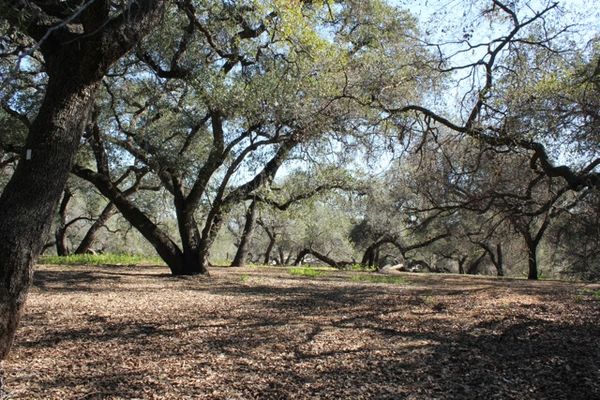 The former librarian at the Los Angeles County Arboretum & Botanic Garden doesn’t remember exactly when the visitor wandered into her office and let drop that he was a descendant of George Engelmann. What Joan De Fato does remember is telling him that there was a grove of rare oaks on the site that had been named for his ancestor.
You don’t have to be a descendant of one of the fathers of American botany to share in what De Fato recalls as his pleasure and amazement. The arboretum’s grove of Quercus engelmannii, pictured above, is one of the last local stands of a native tree once so common to the foothills that an alternate common name is the Pasadena oak.
The first thing that strikes you upon reaching this group of roughly 200 trees is how much more animated it is by birds, butterflies and scampering lizards than the more cultivated parts of the garden.
The second is that it is drop-dead beautiful.
Better than beautiful. Engelmanns are the oak lover’s oak.
Click here to keep reading today’s Dry Garden column in the Los Angeles Times. This piece had been planned before it was announced that the felling of the nearby Arcadia woodland would take place this week. By coincidence, I was interviewing Los Angeles County senior biologist Jim Henrich about the Arboretum Engelmanns as nearby the county’s Department of Public Works began bulldozing 11 acres containing hundreds of established oaks and sycamores, including at least one Engelmann. More will follow on this site about why the county was allowed to raze pristine native woodland to make way for a sediment dump. I share the anger of the reader who has already commented today below the Engelmann article at the Times. In the meantime, for a snapshot of what we lost, and why it so desperately deserves protection, do visit the Arboretum’s grove of Engelmanns.
The week that wasn’t
Posted on | January 8, 2011 | 9 Comments

For those of you who missed the sign-off last Sunday, The week that was has gone the way of the TV show that inspired its name. Launched in June 2009, The week that was lasted nearly as long as the BBC comedy, with pay that would have been low by 1960s public television standards had there been pay. Producing a page that regularly featured both Wen Jiabao and Pat Mulroy was a labor of love, and of profound interest. The reward came in the kind of knowledge that can shut down a dinner party faster than putting Smithsonian Institute Blues on the stereo. When NPR broadcast a capable story about chlorine, chloramine and the way they interact with different plumbing media last week, TWTW had already roto-rootered that material in these pages every week since June 2009 and spent hours producing fiddly links for your clicking pleasure. An abiding interest developed in fracking, with this site becoming an unlikely but all the same core resource on the subject of a gas drilling technique that could very well lead to the contamination of groundwater in scary big swathes of the country. To be frank, part of the reason I am dropping the page is that while the readership was good, and occasionally excellent, the click-on rate wasn’t. To all of those determined to learn about water, I commend above all sources the search engine ProQuest, which is available to most Americans with a library card. For comprehensive daily coverage of California water, there is no better source than Aquafornia. WaterWired amounts to a free education and these websites are all tried and tested. For pure feist, check out On the public record. This site will churn on, with posts as time allows on my presiding passions: horticulture, water conservation in California and the future of the most beautiful place nobody ever heard of, the Great Basin. So, with deep thanks to all who read and supported The week that was, in a watered down variation of “Jeffrey Bernard is unwell,” Emily Green will be on assignment.
The Dry Garden: “Capacity” = good nurseries
Posted on | January 7, 2011 | 2 Comments
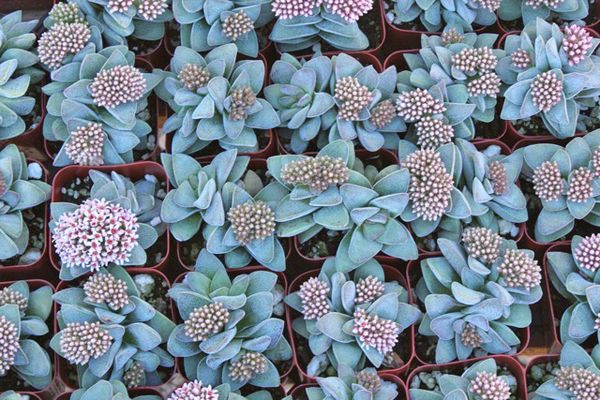 The potential for gardeners here to conserve water while glorying in the California experience is as big as the state. Yet most of us don’t seize it. According to local water managers, the problem is “capacity.”
By capacity, they refer to the ability of chain home improvement stores to stock drought-tolerant native and Mediterranean-climate plants alongside water-hungry turf. Building native-plant capacity in big-box stores is tough. The inventory get watered to death by untrained staff, who don’t know what the plants are much less what they need. So “capacity” tends to be code for “forget about it” when the subject of water conservation comes up.
Well, water managers, reality check. Nursery capacity for native plants is increasing, albeit slowly. A network of independent specialist nurseries is emerging. Most of these not only have trained staff to sell native plants but also offer courses on how to design gardens and how to tend those new Edens.
Click here to keep reading The Dry Garden in the Los Angeles Times. For January listings of Dry Garden Events, click here.
« go back — keep looking »North American Native Plant Societies
After the lawn

Garden blogs
