The Dry Garden: Matilija poppies
Posted on | May 28, 2010 | No Comments
 Two unrelated and equally magical things happen in Southern California in late May and early June. By night, courting mockingbirds sing all night. By day, the Matilija poppies begin their all-too-fleeting bloom. The shame is, while most everyone who sleeps becomes aware of the mockingbird’s song, not everyone with sight will encounter the Matilija, which is, without rival, the biggest, silliest, loveliest and most poignant of California wildflowers.
Click here to keep reading this week’s Dry Garden column in the Los Angeles Times.
Sight and understanding
Posted on | May 28, 2010 | 3 Comments
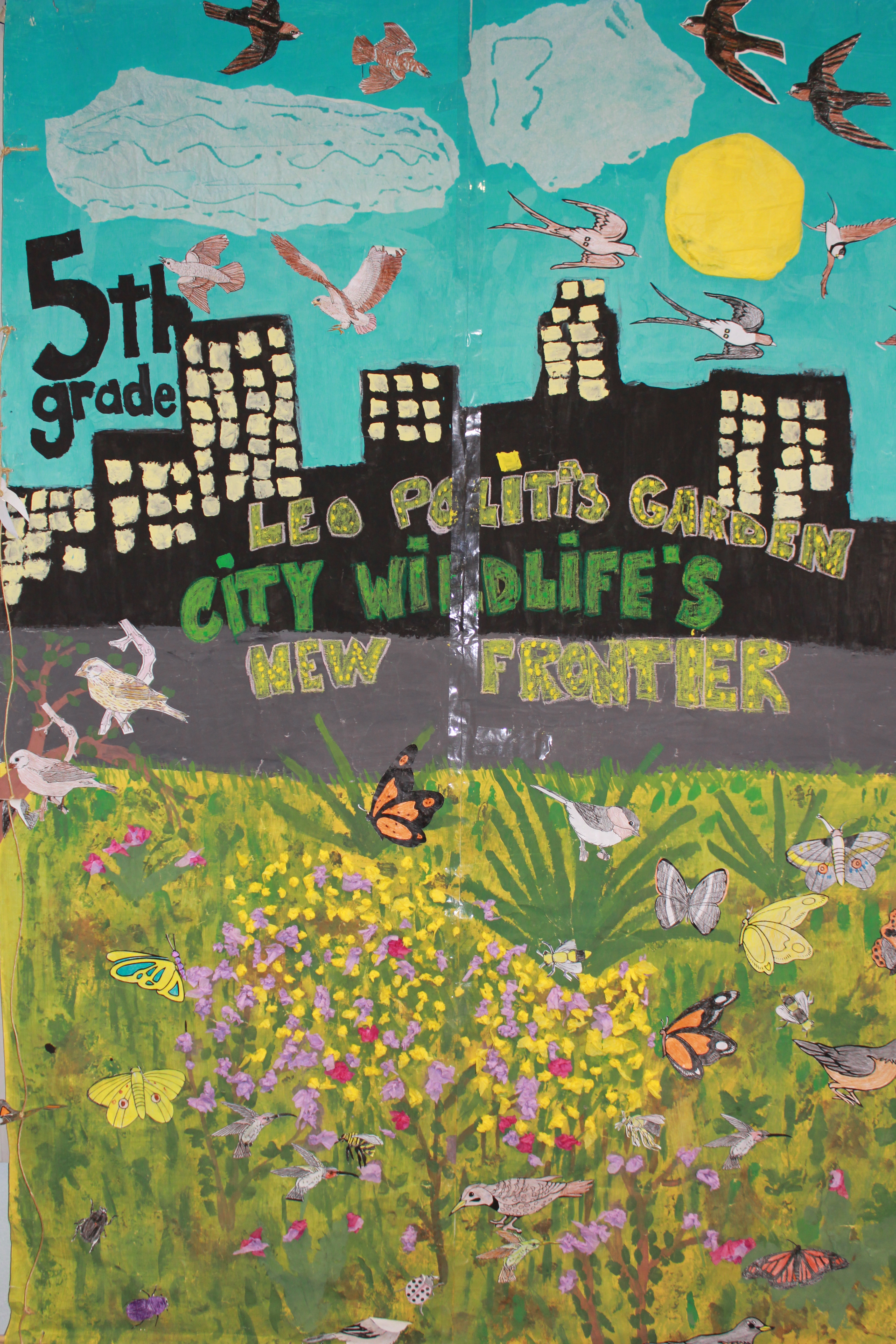 In November, 2009, with support from the US Fish and Wildlife Service and Los Angeles Audubon, the students, parents and staff at Leo Politi Elementary School planted a native garden at the Pico Union campus. Last week, botanical studies of the plants drawn and colored by the students went on display in the school auditorium. If they look traced, and I took them for that in an earlier edition of this post, they’re not (please see Margot Griswold’s correction below). Rather, while the display and attitude of the plants in the drawings look like they owe a debt to professional illustrations, the studies by the children were made as part of a class in which the students grew, dissected and studied the plants. Then their eyes were guided along the minute conformations of plants that most of us never see. They were being taught to observe the species, then key them by their tiniest and most telling traits, then to identify their native ranges on a map and relate those traits to climatic and geographical pressures, and finally to differentiate between common and botanical names.
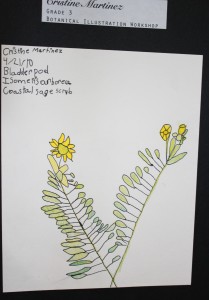
Isomeris arborea / bladderpod from California's coastal sage community by Cristine Martinez, Grade 3. Click on the bladderpod to see more drawings.
Systematics, Latin, art and geography merged in one lesson.
Click here to see student renderings of elderberries, toyons and bladderpods by third and fifth graders, or here to learn about the Politi project from Los Angeles Audubon.
Note: The drawing above is freeform and wholly original.
Tags: chance of rain > Emily Green > Leo Politi Elementary School > school gardens
Mayday
Posted on | May 27, 2010 | No Comments
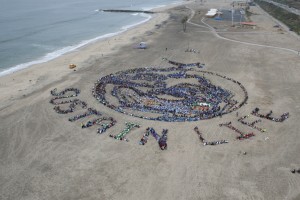
Say it with kids: Today nearly 5,000 children took part in Kids Ocean Day, a beach clean up program sponsored by the LA Stormwater Program, the Los Angeles Board of Public Works, the Malibu Foundation, California Coastal Commission and Aerial Art. Last year, the message was "Save our Ocean." Today it was "Sustain life."Click on the image to learn more about Ocean Day.
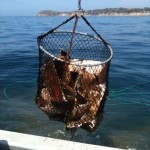
May 26: The SeaDoc Society fishes out hundreds of dumped toilets from the waters off Pt. Dume. Photo: UC Davis. Click on the image to learn more about SeaDoc and its drive against marine debris.
Talk about teachable moments: Late showers in Southern California may have intensified a lesson in marine pollution today for thousands of kids at Dockweiler Beach and sponsored by the LA Stormwater Program. “And here’s how run-off works” … For information about the stormwater program, click here.
Meanwhile, elsewhere around Southern California, Heal the Bay published its Beach Report Card, which showed five of the ten most polluted beach areas in the state were in Los Angeles County. Click here for the report. However, seventy-nine percent of county beaches received A’s or Bs, compared to 70% last year, reports the Los Angeles Times.
Moving from beaches into the surf itself, the SeaDoc Society began a week-long program fishing out lost fishing gear, tires and, yes, an estimated 500 toilets, from waters around Point Dume. Click here for a Malibu Times story on the project, or here to learn more about SeaDoc, an offshoot of UC Davis’s School of Veterinary Medicine. Beyond the clean-up, SeaDoc wants to publicize the Lost Fishing Gear Recovery Project. Click here to learn about how to report abandoned gear.
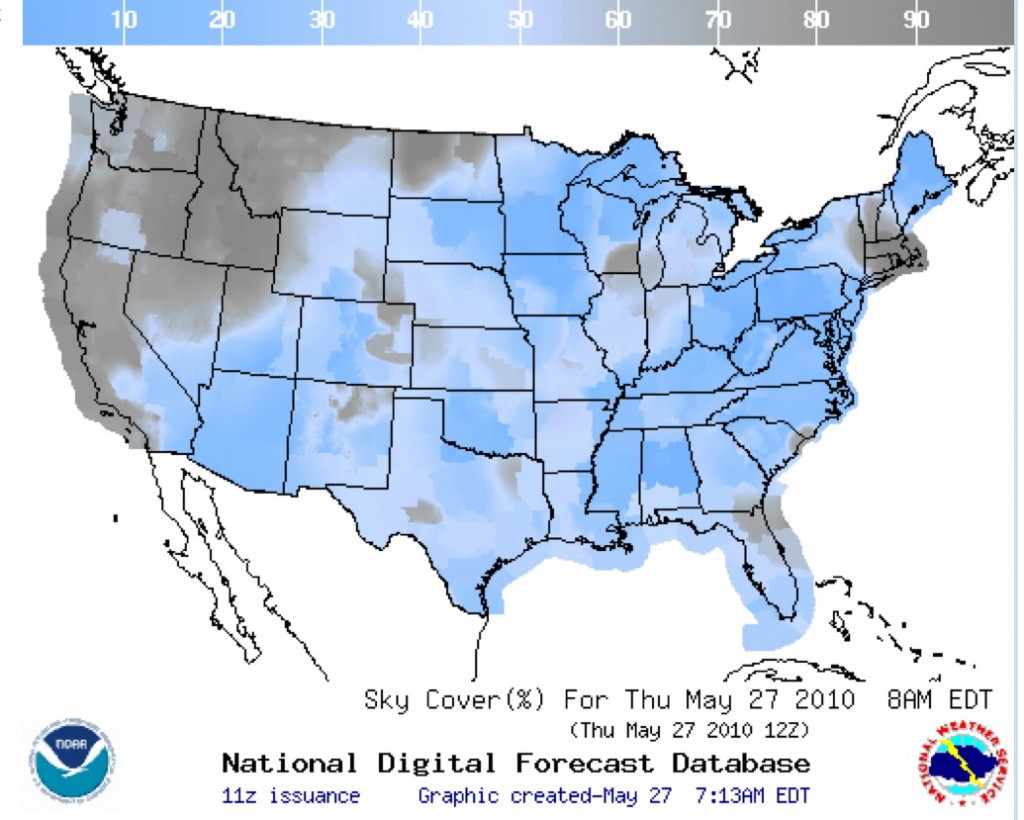
Finally, from the department of beaches, the Surfrider Foundation would like to alert the uninitiated to its new blog, KnowYourH2O. For those simply in search of the weather, click on the map to be taken to the National Weather Service.
The consolidated salmonid cases and us
Posted on | May 25, 2010 | 1 Comment
 Last week in the Eastern District Court in Fresno, Judge Oliver Wanger derided federal biologists for employing “guesstimations” as to how much Sierra snowmelt should be allowed to flow through the San Joaquin and Sacramento rivers and related tributaries into the San Francisco Bay Delta instead of being diverted by pumps to Central Valley farms and Southern Californian cities. The contemptuous conflation was the most quoted part of an 134-page finding in the on-going Consolidated Salmonid Cases, which concluded by intimating that pumping restrictions in place to protect migrating Delta smelt, Chinook salmon, steelhead trout and green sturgeon would soon be relaxed.
Unsurprisingly, the Contra Costa Times and other news outlets report today that pumping restrictions were indeed loosened. Decried by environmentalists and praised by water exporters, the most recent ruling is a temporary call in a game that is far from over. As this battle for California’s fresh water continues, it seems likely if not inevitable that the federal biologists will be required to revisit their opinions.
At a guess, the migratory path of the salmonid cases is bound for an appellate court, even the Supreme Court. Among the ideas being tested is the notion that protections for these fish under the Endangered Species Act must not come at undue expense to humans, even at the expense of the very humans whose activities are imperiling the fish.
If that sounds unfair, almost nothing about water in California is fair. The incredible part to this observer is that among the humans seen in need of immediate relief by the Wanger court are Southern Californians.
Click here to keep reading
Tags: chance of rain > Consolidated Salmonid Cases > Metropolitan Water District of Southern California > Oliver Wanger
Oil and water
Posted on | May 24, 2010 | No Comments
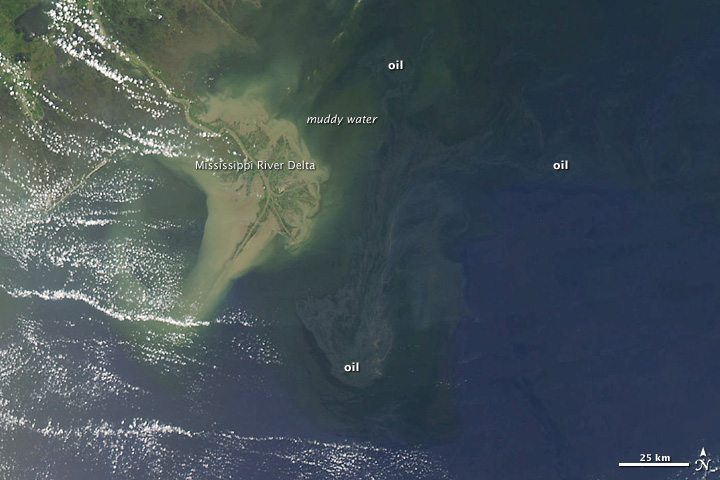 Click on the image to be taken to NASA’s Earth Observatory for the history of this May 23 image of the British Petroleum oil spill in the Gulf of Mexico. Or go to the Huffington Post for the most unflinching coverage of pelicans coated in crude as the oil reaches Louisiana wetlands.
North American Native Plant Societies

After the lawn

Garden blogs
