Take a hike
Posted on | April 17, 2010 | No Comments
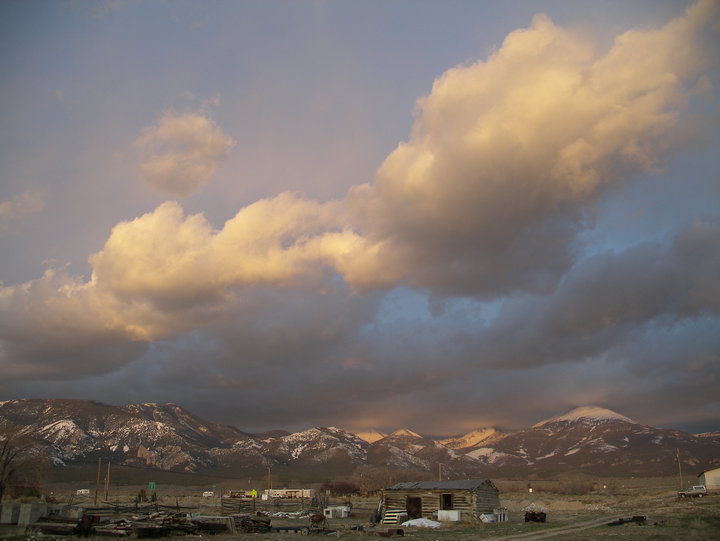
Baker, Nevada, near the Great Basin National Park. Photo: Abby Johnson / Facebook
President Barack Obama yesterday instructed the Interior and Agriculture secretaries, the administrator of the Environmental Protection Agency, and the chair of the Council on Environmental Quality to study how best to reconnect us with the Great Outdoors. Click here to read about it, then pack a bag so it’s not all foreigners blissing out in our National Parks.
Via the Great Basin Water Network.
The Dry Garden: Turning a monument to the past into a model for the future
Posted on | April 16, 2010 | 2 Comments

Richard Schulhof, new CEO of the Los Angeles County Arboretum and Botanic Garden. Schulhof, a native Angeleno, arrived from Harvard's Arnold Arboretum six months ago. “I didn’t come back here because I needed a job,” he said. “I came because I think L.A. should have a great arboretum.” Photo: Genaro Molina / Los Angeles Times
Los Angeles was sold to the world as the place where anything grew. As if to prove it, more than 10,000 exotic plants were tested last century on the grounds of the Los Angeles County Arboretum and Botanical Garden in Arcadia. “The original notion was that it would be a big, big trial ground to see what could flourish in L.A.,” explained Richard Schulhof.
According to the Arboretum’s recently appointed chief executive officer, this makes the arboretum’s collection a living history. So many of the plants tested flourished that roughly half a century later, eucalyptus, palms and bamboo compete with cedars for space in the skyscape. Not that you have to drive to the foothill community next to Santa Anita race track to witness this style of festooning eclecticism. It came to grip all of Southern California.
Six months into his job, one of the challenges facing Schulhof is what to do with the great big collection of exotica. The biggest crisis facing the arboretum may just be that the taste for thirsty imported plants that built the place is bringing down the region. So much of Southern California’s urban water supply goes toward garden irrigation that utilities have started paying customers to abandon exotic planting schemes for native and drought-tolerant ones.
Click here to keep reading The Dry Garden profile of Richard Schulhof in the Los Angeles Times.
Tags: chance of rain > Emily Green > Los Angeles County Arboretum > Richard Schulhof
Hedging its bet
Posted on | April 14, 2010 | 1 Comment
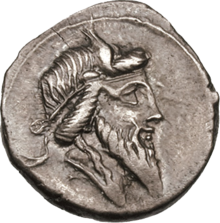
Roman coin thought to have inspired a disgruntled Getty House gardener to adopt the name Mutunus Tutunus and begin carving obscene gestures and messages into local hedges.
Topiarist Mutunus Tutunus will be creating likenesses of shortlisted candidates for the general managership of the Los Angeles Department of Water and Power on Friday night at the G2 Gallery in Venice. Outgoing temporary general manager David S. Freeman will also be honored in a work called “Hat.”
Typical of Tutunus, he refused to supply advance images. “Koons will just steal them,” he wrote to a gallery organizer. If Tutunus shows up, it will be a first. The former mayoral mansion groundsman turned artist is best known for pruning obscene forms into the hedges of Windsor Square residents after they mounted a letter-writing campaign to the mayor berating Tutunus for describing the neighborhood in a local gardening newsletter as Hancock Park, a far better-known, if less elite-sounding name for the area. Since then, Tutunus has only communicated through messages carved in Windsor Square privits.
Organizers of the G2 event warn that if box hedges cannot be found to Tutunus’s specifications, Los Angeles Times contributor Emily Green will be standing in with a lecture on the ecological impact of Southern California garden irrigation. Click here for details. This back-up plan is widely seen as insurance that Tutunus will show. Unlike Green, the topiarist believes that water should be pumped into hedges as fast as they can absorb it, thereby providing plenty of grist for his saw.
“Habitat as fuel”
Posted on | April 14, 2010 | No Comments
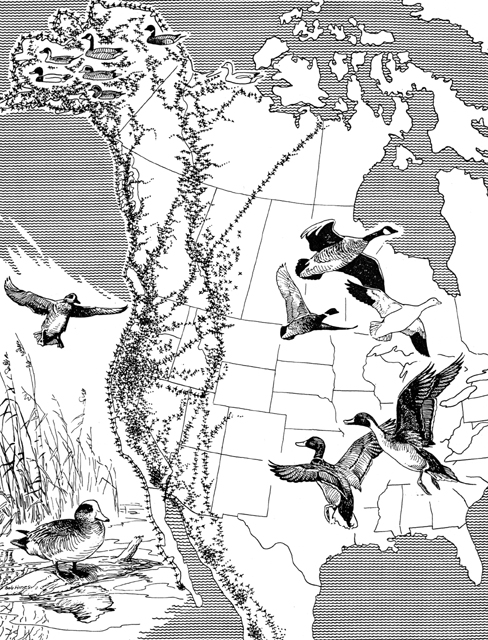 The phrase is James Deacon’s. The University of Nevada biologist used the equation during a 2007 interview to describe the relationship between Las Vegas and the desert ecosystems of the Mojave and Great Basin. It’s borrowed here because Deacon’s observation applies equally well to the impact of cities such as Los Angeles, San Diego and Phoenix on the Colorado River, lakes of the Eastern Sierra and Sacramento-San Joaquin River Delta.
On the face of it, the average city dweller in Los Angeles seems fine with water being drawn from wild places to create an emerald island of lawn and ficus trees. It’s almost certainly a case of ignorance as bliss. At a wild guess, one in 500,000 Angelenos may be aware that our major water wholesaler is suing the federal Interior and Commerce departments, with our money and in our name no less, in order to upend Endangered Species Act protection for trout, salmon and sturgeon in the Sacramento-San Joaquin Bay Delta (the better that we may grow lawn, cut it and throw it away). A few more may be aware of the pleas of the Audubon Society to the Los Angeles Department of Water and Power to leave enough water in Owens Valley, formerly Owens Lake, to support migratory birds. Recently, Heal the Bay president Mark Gold remarked in an interview that even though we in California take the lion’s share of water from the Colorado River, there was never a funeral for its delta — it’s as if we didn’t even notice the disappearance of nearly two million acres of wetlands where the lifeline of the West used to meet the Sea of Cortez.
Is it reasonable, or even possible, for Angelenos to be expected to understand and respect the distant watersheds tapped to sustain us? Can we evolve into a smart parasite, the kind that doesn’t kill its host? On Friday April 16th at 7.30pm at the G2 Gallery in Venice, I will be taking Deacon’s equation and applying it to the cost to the West of sustaining the gardens of Los Angeles, where it’s estimated that half of our urban water supply water goes. The discussion will focus on two questions: Can we and should we use less water to protect the distant wild sources and their flora and fauna? Moreover, when working with the water that we import, should it be part of the social contract to use our public and private gardens to create and maintain meaningful new habitat to support indigenous plants and animals that we have displaced?
The fish did it
Posted on | April 13, 2010 | 2 Comments
 A vote by the board of the Metropolitan Water District of Southern California today all but assures that last year’s water delivery cuts of roughly 20% will continue through 2010. This was expected. One passable rain year does not a recovery make. The weird part of Met’s announcement is the belligerence, which puts responsibility for the “historic” prospect of continued rationing and price hikes on fish.
Roughly a third of Southern California’s water supply comes from the Northern California delta where the San Joaquin and Sacramento rivers meet near San Francisco. The once fecund rivers have been losing their salmon, trout and smelt as the winter snowmelt that feed their waters is diverted south.
As Met’s general manager Jeffrey Kightlinger has it in today’s announcement, “The historic pumping restrictions in the Delta because of endangered fish species are compromising the statewide water system’s ability to capture adequate supplies.”
Disregarding the repeated misuse of “historic,” did Met really imagine that it could destroy the venerable northern Californian salmon fishery with impunity?
Click here to keep reading
Tags: chance of rain > Conservation > Emily Green > Metropolitan Water District of Southern California
North American Native Plant Societies
After the lawn

Garden blogs
