Goodbye rain, hello JPL
Posted on | March 23, 2010 | No Comments
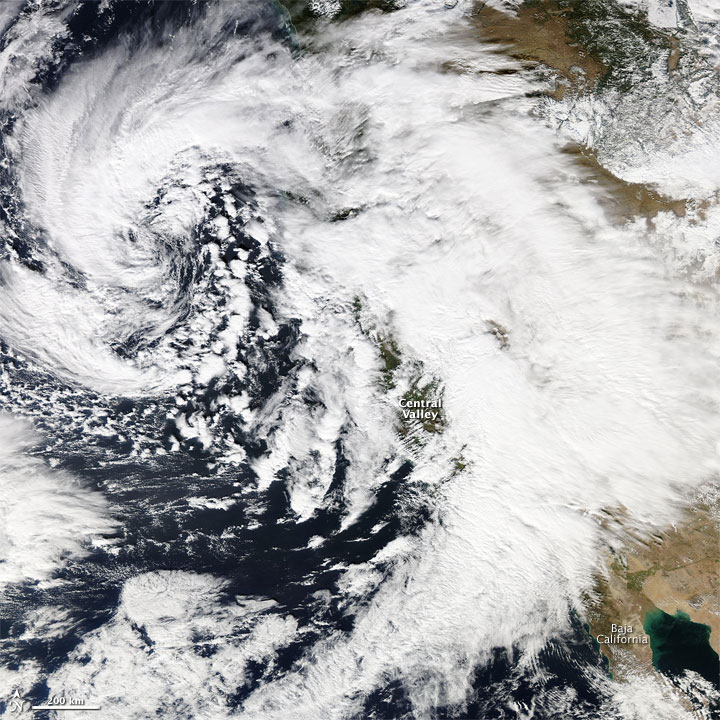
NASA's Earth Observatory captured this image of a large storm over the California coast on January 20th, 2010. This Friday and Saturday, March 26-27, the Jet Propulsion Laboratory in La Canada Flintridge will be hosting two Climate Days in which scientists from NASA and the National Oceanic and Atmospheric Administration will explain to classes and members of the general public the effect of greenhouse gases and clouds on climate, the difference between weather and climate, the role of the ocean in global warming and how scientists study Earth's climate from space. Attendees may participate in hands-on activities, view exhibits, demonstrations, student presentations, play Climate Jeopardy and other games, and get information on careers and resources for teachers and community members. Click on the Pacific storm for more information.
The meteorologist/blogger Bad Mom, Good Mom recently copied me in on a query to Jet Propulsion Laboratory oceanographer Bill Patzert: “It looks like the Pacific high is nearly stationary offshore from us,” she wrote. “No rain thru 3/27 (and probably longer) … is it here to stay for the rest of the spring & summer?”
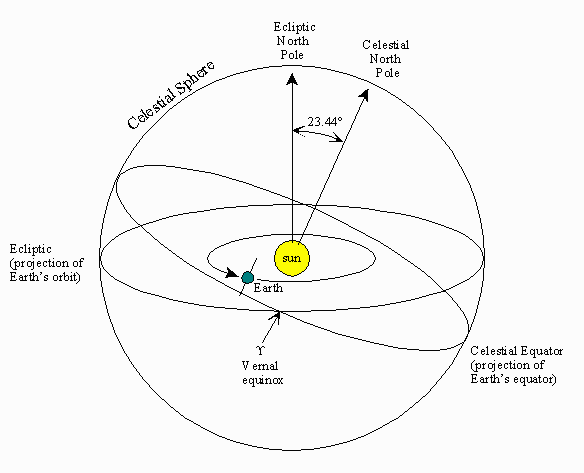 Patzert replied, “After the Vernal Equinox (last Saturday, March 20th), the Northern Hemisphere begins to rapidly warm up. This expands the North Pacific High and shrinks the North Pacific Low. As the High expands and strengthens, storms weaken and go farther to the north of California. Also, winds from the north (the eastern segment of the High) get stronger and upwelling along our coast picks up. Cooler water, more marine layer; thus, May gray and June gloom. The High is strengthening, northerly winds are becoming steadier, there is more coastal and inland fog, and no North Pacific storms … our dry six months.
The upshot for those of us reading the exchange between the two scientists is that the 2009/10 rainy season is ending in Southern California. The precipitation total so far this rainy season for downtown Los Angeles is just shy of normal at 14.66 inches. The average reckoned between 1971 and 2000 is 15.24 inches. The average rainfall for March is 3.14 inches; so far this month we have received .48 inch. “We had early rain in October,” said Patzert. “Usually a wet fall means a dry spring. I don’t see anything over the horizon, but April could surprise us.”
Los Angeles rain gauge:
2009: October 2.07”; November .01”; December: 2.89”
2010: January 4.94”; February 4.27”; March .48”
Click here for NOAA’s online weather data page. Or for an excellent educational foray, click here to be taken to Bad Mom, Good Mom’s feature “Walking my Watershed.”
Image of the Day: Purple haze
Posted on | March 23, 2010 | 1 Comment

“Fifty Year Bloom, Near and Far," Peace Valley, Gorman, California. Photo: Rob Badger
“Where the Wild Things Grow” opens today at the G2 Gallery in Venice, California and runs through May 2nd. Photographers contributing to the group show include Rob Badger, who took the photo above, Edis Jurcys, Randy Redekopp and Nita Winter.
End of days
Posted on | March 22, 2010 | 10 Comments
 Today is “World Water Day.” Yippee. Yikes. Whatever. It would be hypocritical of me not to confess to using the occasional chronological gimmick to further pet causes (highlighting March as “Red Cross month” on this site after the Chilean earthquake is a recent example.) But, as a rule, this kind of thing confuses me. Who in their right mind thought, “Hey, we’re wrecking the world. I’ve got an idea! Let’s name a special day (week, year).”
Climate Week didn’t stop the Chinese from upending Copenhagen talks. Forty years of “Earth Day” did nothing to stop the generation that first celebrated it from popularizing the SUV. World Water Day has a hilariously well hydrated-looking Nestle executive in the news.
As we parse the mess we make, dare we conclude that special days are so last century, that while the event-ification of creeping disaster keeps a lot of excitable PRs busy, chronological gimmicks don’t do a damn bit of good for our blue marble? A modest proposal: How about we grow up, fire the event organizers and get down to 365 programs that actually work?
*The headline was changed shortly after posting.
The Dry Garden: What’s that bug?
Posted on | March 20, 2010 | No Comments

Pterotus obscuripennis. Source: Santa Barbara Museum of Natural History. Click on the telltale feathery antennae to be taken to the museum's Beetle Project.
Three things happen when you plant a garden. You meet your neighbors, who stop to chat. You meet their kids, who hang out. And you meet the bugs that the kids find. The ability to identify the bugs ensures you heroic status in the eyes of children. Failure to identify them is a crashing experience not to be wished upon one’s worst enemy.
Click here to keep reading the Dry Garden column in the Los Angeles Times as Cal State Northridge entomologist James N. Hogue gives tips on identifying bugs for kids.
Hogue is co-author with Arthur V. Evans of “Field Guide to Beetles of California.” Click here to find out about Hogue’s April 3 class “Insects and Native Plant Gardens” at the Theodore Payne Foundation in Sun Valley, California. Or click here for the summer camp program of the Santa Barbara Museum of Natural History, including classes on structures that animals build and what’s in dirt. For the San Diego Museum of Natural History family and kids programs, click here and for the Los Angeles County Natural History Museum programs, here.
Stop press: Fish need water
Posted on | March 19, 2010 | No Comments

As reported last night by McClatchy Newspapers, and today by everyone, a scientific panel appointed by the National Academy of Sciences to review controversial federal protections for endangered California coastal fish has concluded that fish need water.
Or, in newspeak, the panel has reported that assessments by federal scientists that led to reductions of water diversions from the Sacramento-San Joaquin Bay Delta for Central Valley farms and Southern Californian cities were “scientifically justified.”
The protections for Delta Smelt, Chinook Salmon, Steelhead Trout and Green Sturgeon recommended in 2008 and 2009 by biologists from the US Fish and Wildlife Service and the National Oceanic and Atmospheric Administration fisheries division were put to the academy panel for scrutiny last year at the behest of members of the powerful California congressional delegation. Led by Senator Dianne Feinstein, the delegates who demanded the review repeatedly suggested that the federal scientists had over-emphasized the impact of churning pumps and dry stream beds on the collapsing fish populations.
Rather, the senator and Central Valley Representatives Jim Costa (D-Fresno) and Dennis Cardoza (D-Modesto) argued that there were other factors killing the fish.
The National Academy of Sciences committee assembled to consider the soundness of the opinions of the federal biologists acknowledged that there are indeed other “stessors” on the fish besides lack of water, including pollutants that run off from farms and cities. The committee will continue to study why fish die off when their fresh water source is heavily tapped to sustain farms and cities throughout the state while northern Californian agricultural and urban conurbations steadily release pollutants into their diminished waterways.
But the take home news nugget of the day is that experts agree that fish need water.
Elsewhere in California’s convoluted world of water, the Pasadena-based NPR affiliate station KPCC yesterday carried Democratic responses to the challenge from right wing blabbermouth Rush Limbaugh that Reps Cardoza and Costa were somehow withholding votes on healthcare legislation as leverage in the congressional water war. The Central Valley reps have been squared off against fellow California Democrats over an attempt by Feinstein to weaken the Endangered Species Act, under which the fish protections are enforced. Dissenting Democrats led by Los Angeles Congresswoman Grace Napolitano argued that attempts to undermine the Endangered Species Act could lead to the unraveling of comprehensive water reform legislation scheduled to come before California voters in the form of an $11bn-plus bond measure in the fall.
Cardoza called Limbaugh’s suggestion “absurd.”
Click here for the KPCC report, and here to download a copy of the National Academy report.
« go back — keep looking »North American Native Plant Societies
After the lawn

Garden blogs
