High good, low bad: Mead in February 2010
Posted on | March 1, 2010 | 1 Comment

Memorial by artist Oskar J.W. Hansen to the men who died in the construction of Hoover Dam. For more on Hansen's work for the dam-building project that made the federal Bureau of Reclamation a defining force in the naturally dry west, click on the image. Photo: Gregvreen's Photostream, Flickr
Between 96 and 112 men died in the construction of Hoover Dam, depending on how you count the deaths (from the time of the dam’s commission in 1922 or from the start of construction in 1931).
Did they die to make the desert bloom, or because the massive federal works project offered jobs job during the Great Depression? Whether they took one for a buck or a bloom, ever since the dam’s completion and the filling of Lake Mead behind it in 1935, the captured water has gone to both desert farming in California and Arizona and a massive Southwestern housing boom.
The upshot has been an ever-swelling population dependent on a naturally varying supply of water. Since 2002, that variation has been toward a dry cycle, leaving sunbelt suburbs and farms in a Darwinian struggle for water. Moreover, the specter of climate change suggests a starkly drier future. The steadily descending elevations of Lake Mead during the last decade are laid out after the jump. The federal Bureau of Reclamation reports that Mead is at 46% of capacity and the entire Colorado River system at 56%.
Click here for closing February elevations 2002-2010
The week that was, 2/21-27/2010
Posted on | February 27, 2010 | No Comments
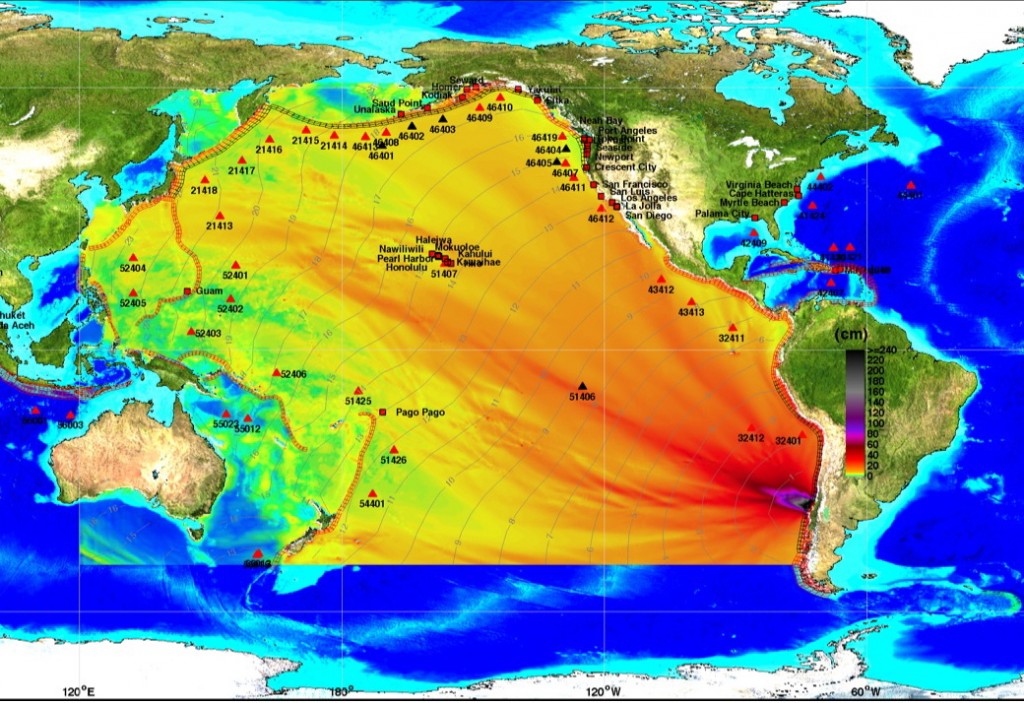
Click on the image to be taken to the National Oceanic and Atmospheric Administration's Center for Tsunami Research to see how models calculate earthquake reverberations in the ocean. The models allow time for evacuation alerts. NBC reported that "tsunami waves began hitting the Hawaiian islands at "exactly the time scientists predicted."
The tsunami raced across the Pacific Ocean at the speed of a jetliner after the quake hit Chile hours earlier. — “Quake-triggered tsunami rushes ashore in Hawaii,” AP / Seattle Times, February 27, 2010*
… the sea level rose almost three feet at Hilo, surging and receding numerous times at intervals of about 20 minutes. — “Tsunami waves crossing the Hawaiian Islands,” NBC Hawaii News Now, February 27, 2010. Click here for time-lapse video.
… if one plate dives under the other, which is probably what occurred early Saturday off the coast of Chile, it will displace “a huge column of water.” — Solomon Yin, director of the Hinsdale Wave Research Laboratory, Oregon State University, “Tsunami magnitude difficult to predict,” Los Angeles Times, February 28, 2010**
The Dry Garden: Protecting the Pacific
Posted on | February 26, 2010 | No Comments

What, you might ask, does the ocean have to do with gardening? In California, Orange County landscape designer Douglas Kent would reply: Everything. All the rain that we don’t catch during the winter and all of the irrigation spilled into the streets from our sprinklers in the warm months end up as storm water. “Water running into the ocean is not inherently harmful,” Kent writes in his new book Ocean Friendly Gardens. “It is the stuff attached to it and the stuff it picks up on the way to the ocean that is. Fertilizers, pesticides, oils, cleaning solutions and organic debris all run off a landscape.”
Click here to keep reading about Kent’s new book published by the Surfrider Foundation in the “The Dry Garden” column of the Los Angeles Times
Nevada head of Natural Resources: I am not carrying the water for SNWA
Posted on | February 25, 2010 | 1 Comment
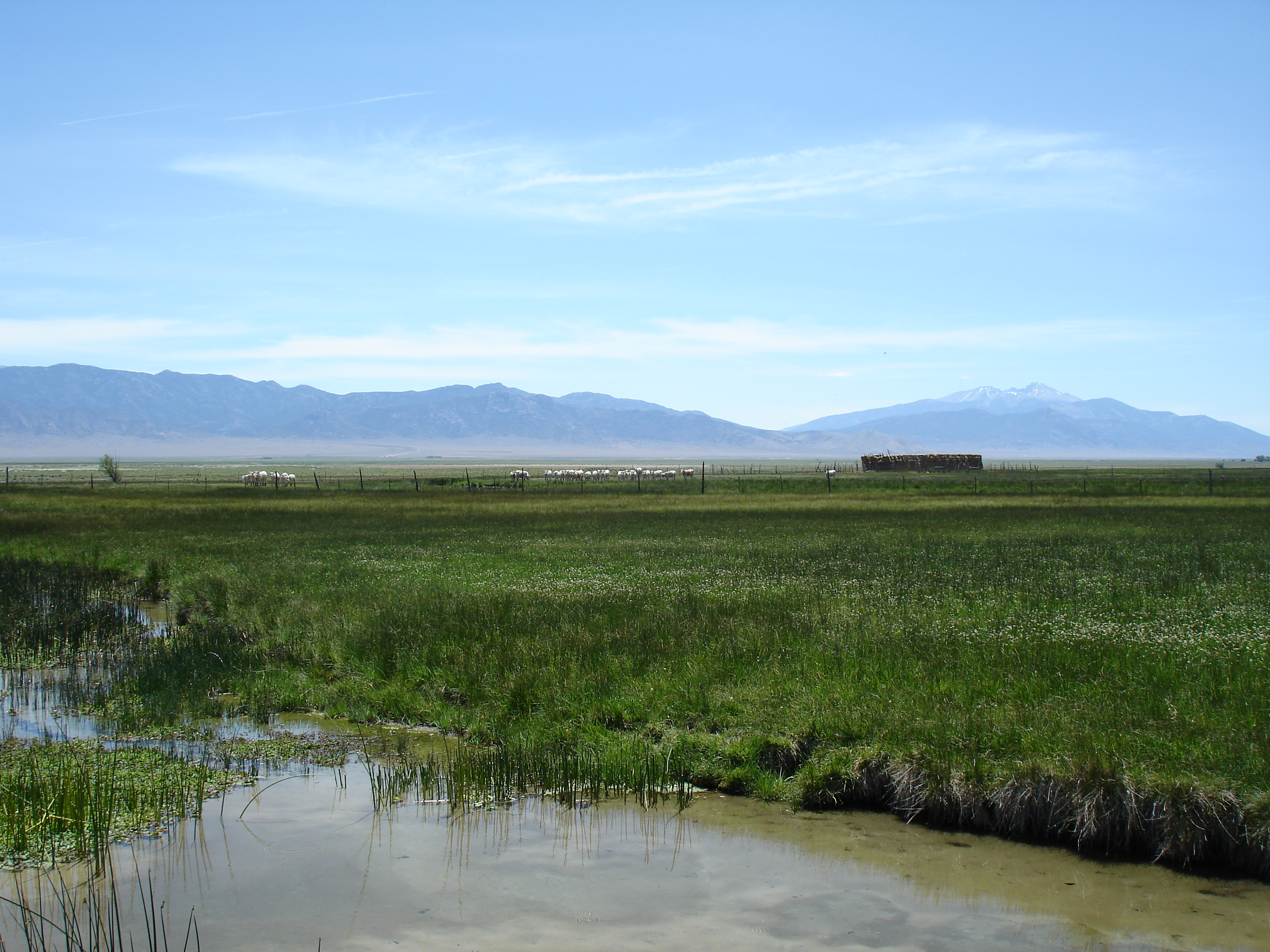 Updated 10.16am 3/1/2010. The Las Vegas Review-Journal reports that the Nevada Legislature will send the proposed water bill to committee before disbanding its special session today. Governor Jim Gibbons may recall legislature for a vote on it once the bill is out of committee.
Governor Jim Gibbons’ instruction to the Nevada legislature to amend state law in a way that would retroactively legalize water awards made since 1947 will not render moot a recent state Supreme Court decision that threatens the future of a controversial Las Vegas pipeline project, a senior state official said today.
Rather, Allen Biaggi, head of the Nevada Department of Conservation and Natural Resources, insisted that the Governor’s instruction has been accompanied by proposed language that excludes from amnesty any awards made to the Southern Nevada Water Authority.
However, as pipeline protestors read the same document, they say they are better off staying in the courts and out of legislature.
“A hero named Pat”
Posted on | February 25, 2010 | 1 Comment
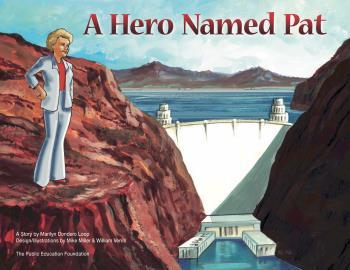 One way to write your own history in an heroic guise is to follow suit of the Las Vegas Public Education Foundation’s curiously Soviet tradition of immortalizing city players in children’s books, then placing copies in every public school. Southern Nevada Water Authority general manager Pat Mulroy was the latest in the “hero” series honoring local burghers. Many thanks to the Great Basin Water Network for the alert to this classic of its sort. “A Hero Named Pat” is a first class curiosity, but it is the works of Dr Seuss that are the subject of the upcoming Read Across America Day. For those of you who haven’t registered to take part in the National Education Association’s utterly wonderful event on March 2nd, there is still time to contact your local school and offer to read with a class. Think of the fun. Horton hears a Who! Green Eggs and Ham. Pat in the Hat?
North American Native Plant Societies

After the lawn

Garden blogs
