Sight and understanding
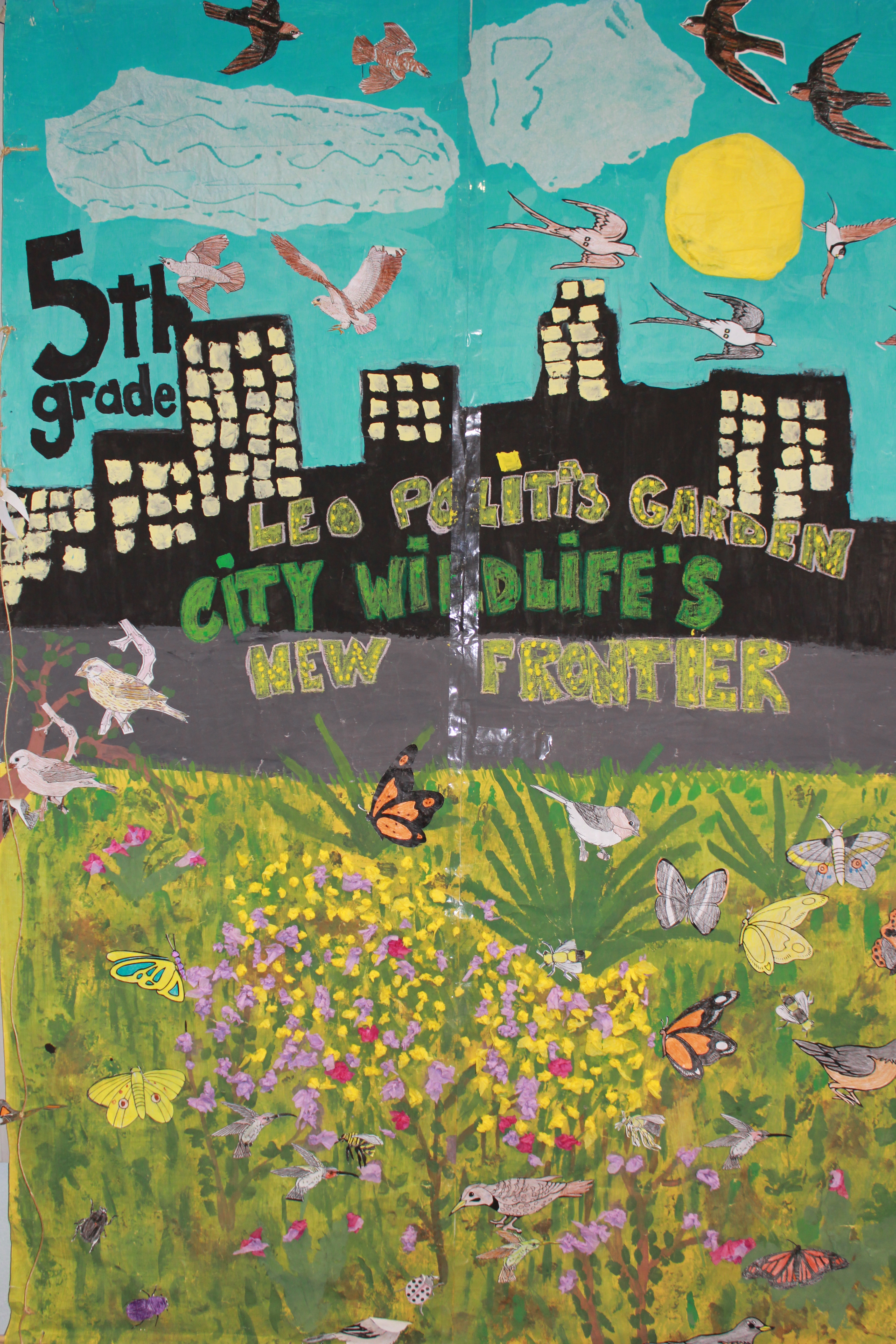
In November, 2009, with support from the US Fish and Wildlife Service and Los Angeles Audubon, the students, parents and staff at Leo Politi Elementary School planted a native garden at the Pico Union campus. Last week, botanical studies of the plants drawn and colored by the students went on display in the school auditorium. If they look traced, and I took them for that in an earlier edition of this post, they’re not (please see Margot Griswold’s correction below). Rather, while the display and attitude of the plants in the drawings look like they owe a debt to professional illustrations, the studies by the children were made as part of a class in which the students grew, dissected and studied the plants. Then their eyes were guided along the minute conformations of plants that most of us never see. They were being taught to observe the species, then key …
Mayday
Say it with kids: Today nearly 5,000 children took part in Kids Ocean Day, a beach clean up program sponsored by the LA Stormwater Program, the Los Angeles Board of Public Works, the Malibu Foundation, California Coastal Commission and Aerial Art. Last year, the message was "Save our Ocean." Today it was "Sustain life."Click on the image to learn more about Ocean Day.
May 26: The SeaDoc Society fishes out hundreds of dumped toilets from the waters off Pt. Dume. Photo: UC Davis. Click on the image to learn more about SeaDoc and its drive against marine debris.
Talk about teachable moments: Late showers in Southern California may have intensified a lesson in marine pollution today for thousands of kids at Dockweiler Beach and sponsored by the LA Stormwater Program. “And here’s how run-off works” … For information about the stormwater program, click here.
Meanwhile, elsewhere around Southern California, …
The week that was, 5/16-22/2010
On May 18, 2010, Judge Oliver Wanger of the Easter District Court in Fresno, CA, intimated that water reserved under the Endangered Species Act in the San Fancisco Bay Delta system to aid fish migrating through its tributaries may be diverted to Central Valley farms and Southern California cities because of the impact of fish protections on water users. A subsequent ruling is expected this week.
It is in the public interest that relief be granted to Plaintiffs, who represent a substantial population of water users in California, to enhance the water supply to reduce the adverse harms of destruction of permanent crops; fallowed lands; increased groundwater consumption; land subsidence; reduction of air quality; destruction of family and entity farming business; and social disruption and dislocation, such as increased property crimes and intra-family crimes of violence; adverse effects on schools and increased unemployment leading to hunger and homelessness. This must …
The Dry Garden: Descanso in recovery
Schematic from the Long Range Conceptual Plan for Descanso Gardens developed with the Portico Group. Click on the drawing to be taken to the Seattle company's master plan for Descanso.
Nowhere in the West is sustainable gardening a harder sell than in Southern California. Public gardens preach conservation, but their grounds are surrounded by turf. The message to visitors: Eastern-style, highly irrigated gardening is not just OK here, it’s the way it’s done.
And so, it is beyond refreshing, more like happy dance exciting, that Descanso Gardens has begun what will be a long-range overhaul in which water conservation is the central theme. The messaging will start with the landscaping.
A 237-page review, grandly titled a “Long Range Conceptual Plan,” outlines what will one day be a sweeping overhaul with a paean to water. “The structure of the garden plants, native and introduced, is informed by water. The Gardens’ cultural …
Waterman
From the Pasadena-based NPR affiliate KPCC: “In the spring of 2008, author and National Geographic grantee Jonathan Waterman launched a journey by boat and by foot down the Colorado River. His 1,450-mile trip began at the river’s source in Rocky Mountain National Park and followed the river through the Sonoran desert and the parched Mexican delta, all the way to the Pacific Ocean. The Colorado River supplies water for more that 30 million people and 3 million farm acres and is the most diverted and litigated river in the world. Through his journey, John Waterman gets to the heart of the complex issues facing the river whose water levels have dipped to an all-time low. His book examines the impact of the Colorado’s peril on a vast region and looks at the immense debate over water use …
« go back — keep looking »North American Native Plant Societies

After the lawn

Garden blogs
