The week that was, 12/27/2009-1/2/2010
Revelers go for a New Year's Day swim in Malo-les-Bains, northern France, January 1, 2010. Photo: Reuters. For the Toronto Sun's gallery of New Year's Day plunges around the world, click on the bathers.
“I found out about it when I was about eight, and I never manned up to do it. But now I did.” — Twenty-two-year-old Jeffrey Vanek, while pulling up his boxer shorts amid catcalls from 500 people, “Naked water skiing, Bloody Marys and breakfast burritos — it’s the 30th Annual Bethel Island Frozen Bun Run,” Contra Costa Times, January 1, 2010…
The Dry Garden: ‘Canyon Prince’
OF ALL the creatures that disperse plants in nature, we humans may be the quirkiest. Take how we distribute New Zealand flax. We fight back its blades along what seems like every other front walk.
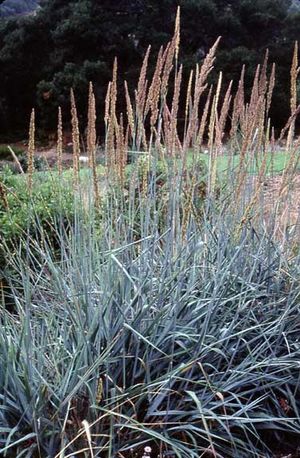
This column is to commend an indigenous alternative to New Zealand flax for the gardens of greater Los Angeles: a type of giant wild rye called Canyon Prince. Ninety-nine percent of the time that flax is used in California, this cultivar of Leymus condensatus could perform the same function, but better.
To keep reading the lastest installment of the Dry Garden in the Los Angeles Times, click here.…
High good, low bad, Mead elevations 1999-2009
Source: federal Bureau of Reclamation. Click on the image for its 2010 operating plan for the Colorado River.
NOT everything went down during the Noughties. While federal Bureau of Reclamation records show that the elevation of Lake Mead, the major “lower basin” Colorado River reservoir serving Arizona, California and Nevada, fell more than 117 feet, the population of the US states served by Mead rose. The US Census Bureau estimates that the population of the driest state in the country, Nevada, climbed 32.3%, while Arizona’s increased 28.6% and California’s 9.1%.
If Lake Mead were a financial institution, people might, stress on might, question the logic of outgrowing one’s resources. As John Fleck of the Albuquerque Journal pointed out after reading the first version of this post, Mead is at its lowest elevation since it was first filled in the 1930s.
But the spendthrift lower basin states such as Nevada have …
Western datebook: January on the half shell
With warm wishes for 2010, a few events of note:
January 5: “Borderlands,” a show from the International League of Conservation Photographers studying the impact of the border fence between the US and Mexico, G2 Gallery, Venice, California, through February 7
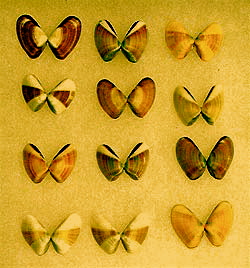
January 13: Southern California Shells and Beaches from Prehistoric Fossils to Modern Seashore Life with Scott Rugh, Collections Manager, Invertebrate Fossils, San Diego Natural History Museum, Casa Romantica Cultural Center Lecture Series, San Clemente
January 13: State of the Bay Report and Conference, Bay Restoration Commission, Stewards of Santa Monica Bay, Los Angeles
January 14: G’day Australia Week 2010 Water Policy Forum, Los Angeles
January 27-29: Climate Change Impacts on Water, policy conference with Jane Lubchenco, Administrator, National Oceanic and Atmospheric Administration, Washington DC
Chance of Rain will begin publishing …
Hasta la vista, 60 Minutes
WaterWired and Aquafornia both have last night’s 60 Minutes report on California water embedded for your viewing pleasure. Be warned, WaterWired links back here. Those instantly overtaken by boredom whenever a speech (tv program, headline, fill in the blank) opens with the threadbare Twain quote “whisky is for drinking, water is for fighting,” be further warned: Lesley Stahl opens with it.
Beyond the cliches, the esteemed news magazine offers a decent potted version of our water woes. An empty promise of a free drink to anyone who counts how many times Stahl called the Delta smelt “tiny.”
On the subject of size, a couple of minutes, far fewer than 60, of checking crop output would have taken the enormity out of what the program suggests is a looming almond crisis says On the public record. That and a half-way energetic intern might have put a question mark over the …
« go back — keep looking »North American Native Plant Societies
After the lawn

Garden blogs
