Starve the lawn, not the tree
Posted on | October 1, 2014 | 3 Comments
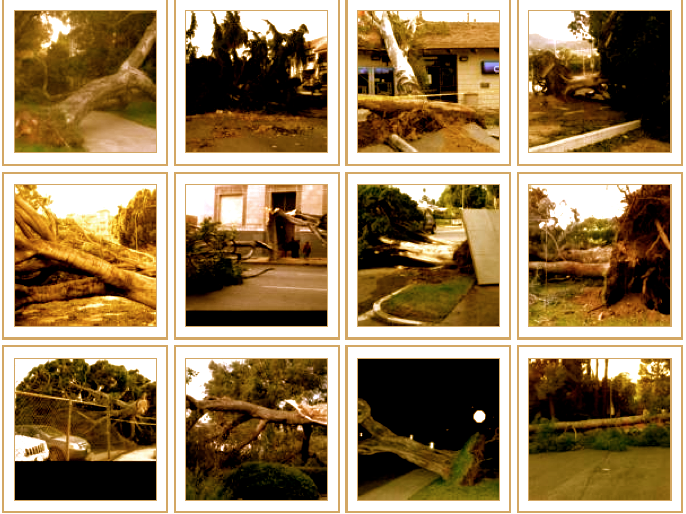
Photos: University of California Tree Failure Report Program
It’s encouraging to see residents of greater Los Angeles cutting back on lawn irrigation and/or switching to less thirsty ground-covers. But there has been an unintended consequence. Civic-minded homeowners have been under-watering — or not watering — their trees. While deciduous trees register the stress palpably enough that many homeowners are alerted to the need to irrigate, most evergreens can’t wilt. Rather, their leaves furl and their needles droop. Formerly turgid and healthy limbs become brittle and vulnerable to boring insects and the diseases that the bugs too often carry. Stress a big tree enough and it becomes prone to what monitors of our urban canopies call “tree failure” (an interesting term for an outcome that is almost never the tree’s fault, but that of those managing it). A treeless Los Angeles would be a harsh, hot and bleak place. To prevent that from happening the Urban Forest Council has issued this brochure. Click here for more about common causes of tree failure, and here, here and here for an excellent three-part guide to planting trees from horticulturist and Rancho Santa Ana Botanic Garden fellow Barbara Eisenstein.
Tags: Barbara Eisenstein > chance of rain > tree failure > Urban Forest Council
Joke shaming water wasters works
Posted on | July 30, 2014 | 1 Comment
 “A lot of suburban water planners plan for yesterday,” says Eric Kuhn, general manager of the Colorado River Water District. But in Denver the national baby boomer vogue for suburban “ranchettes” with water-sucking lawns so big that you need a tractor to mow them is giving way to a millennial preference for downtown living in condos and lofts. SUVs are out, light rail, car and bike shares are in. And when it comes to water policy, Denver is behaving in a way that makes the future seem not only tenable but even bright.
Click here to keep reading in the Guardian’s Live Better Challenge about how Denver Water dealt with the potentially devastating loss of a massive dam project. It turned to conservation and a lot of jokes.
Tags: chance of rain > Denver Water > Emily Green > Guardian
Bracing for scarcity
Posted on | July 7, 2014 | No Comments
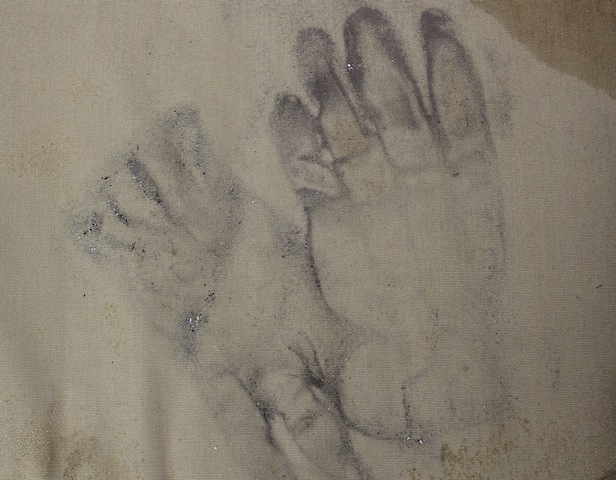
Rain shroud: Imprint left by garden gloves on a sun cushion after a March 1st rain, one of the few in a sharply low rainfall year for Los Angeles County in 2013-14. Panelists at Thursday evening’s “Just Add Water” discussion at the Natural History Museum will explore the potential for landscape reform to both beautify Los Angeles and gird it for water scarcity. Photo: Emily Green
Carol Bornstein, head of the new gardens at the Natural History Museum of Los Angeles, Pamela Berstler of G3 Green Gardens Group and Jon Christensen of UCLA’s Institute of the Environment and Sustainability will be my fellow panelists Thursday for the Natural History Museum’s “Just Add Water” talk on landscape reform. Before taking over the recently installed native and food teaching gardens at the museum, Bornstein was director of horticulture at the Santa Barbara Botanic Garden and co-wrote the cult book “California Native Plants for the Garden.” Berstler, a landscape designer turned activist, now works with local coastal preservation groups and water companies to re-train landscape maintenance teams with low water, energy and pollution protocols. As a perk to those who attend Thursday evening at 6.30pm, the museum’s co-host for the talk, Jon Christensen, will be giving out copies of the centenary aqueduct issue of Boom: A Journal of California. Click here for more information.
Tags: "Just Add Water" > chance of rain > Emily Green > Natural History Museum of Los Angeles County
Cecil Garland, 1925-2014
Posted on | May 14, 2014 | No Comments
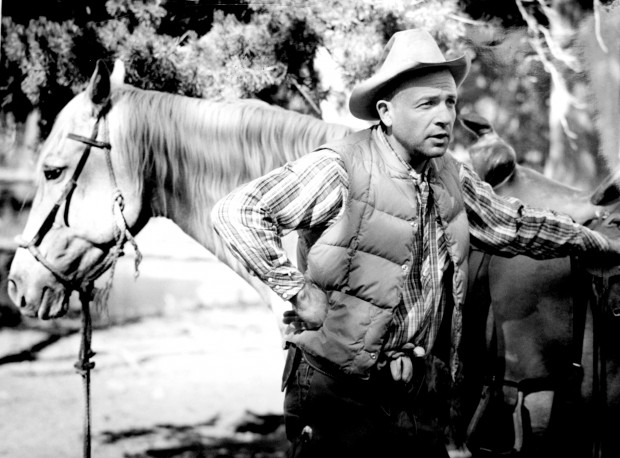 Cecil Garland, the Utah rancher whose name is synonymous with wilderness preservation throughout the Great Basin and in Montana, died Sunday of pneumonia according to an obituary issued through the Great Basin Water Network. Click here to keep reading
Tags: Cecil Garland > chance of rain > Great Basin Water Network > Las Vegas
Avoiding pollution, drought’s evil twin
Posted on | February 21, 2014 | 6 Comments

A gardener aerosolizes dust when blowing leaves from a dry verge in LA County. Drought means that it’s more important than ever to stop this practice and that leaves be left piled near trees, grass left where it falls after mowing and that leaf blowers not leave the truck. Any foliage that spills into streets should be raked. Leaf blowers in drought send dry earth airborne to lethal effects for asthma sufferers, particularly children and infants. Photo: Emily Green
Drought means changing not only our outdoor water use, but also the way we tend our gardens, parks and schools. If you are a facilities manager, homeowner or invested tenant accustomed to fertilizing lawn and roses every spring, don’t do it this year. The chemicals, salts and nitrogen will concentrate in your garden, in the street-side gutters, in the storm drains, in our already impaired rivers, wetlands and beaches. The reason? They will have no dilution in the form of heavy winter storms sweeping the basin clean. At the rate we’re going, they won’t even have sprinkles. Joining fertilizer and pesticides in the Do Not Touch category should be leaf blowers, which will drive dry soil, mold and contaminants into the atmosphere and, count on it, into our lungs. Most gravely at risk will be gardeners, closely followed by children, the elderly, pets and wildlife.
What should we do? Click here to keep reading
« go back — keep looking »North American Native Plant Societies
After the lawn

Garden blogs
