Rambling LA: Native gray
Posted on | September 29, 2009 | 2 Comments
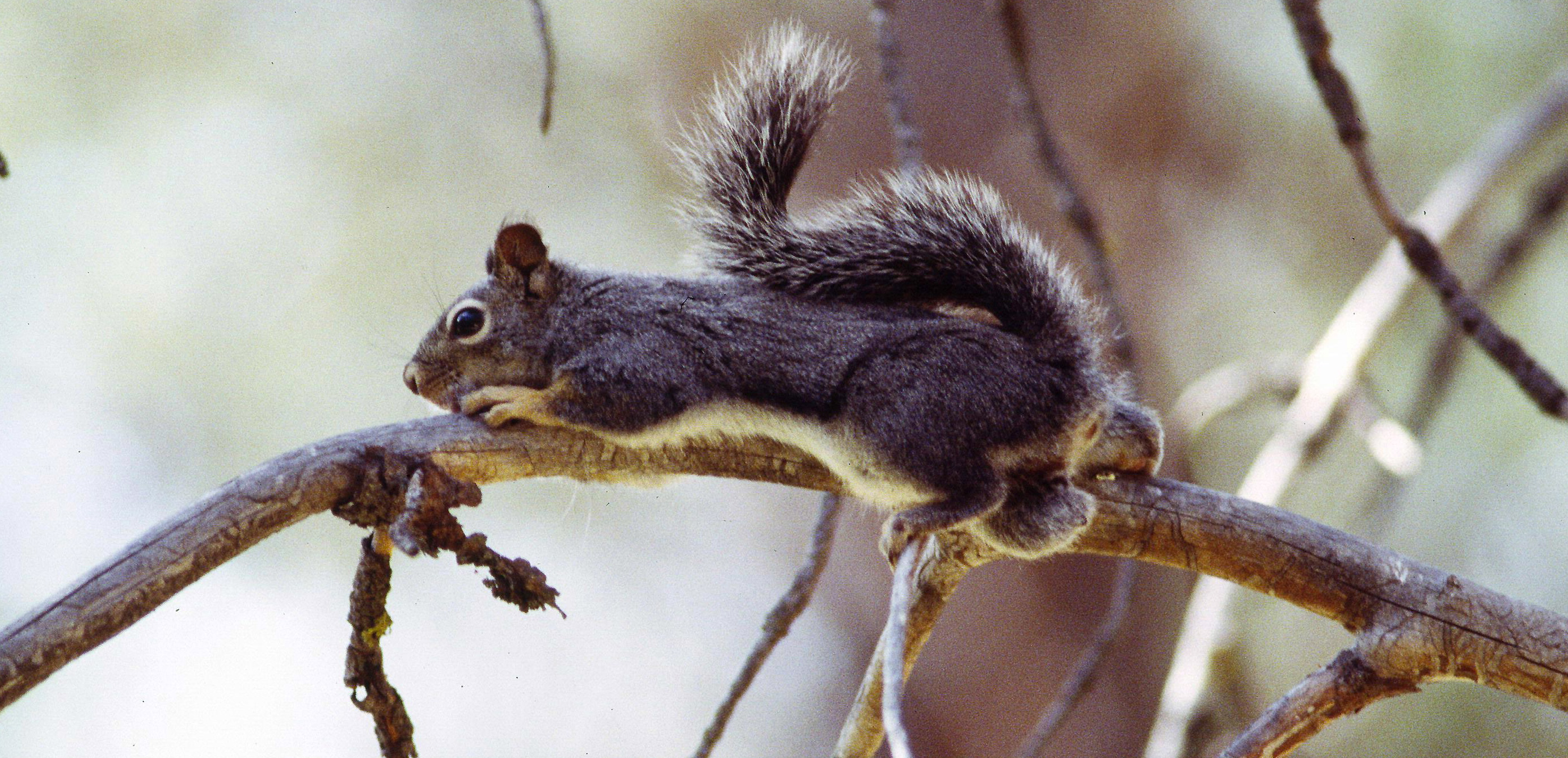
Western gray squirrel, Sciurus griseus. Photo: Terry Spivey Photography, Bugwood.org.
By Ilsa Setziol
Who hasn’t watched their backyard squirrels scurry along power lines, spiral up and down tree trunks, whip their tails and holler “chkk-chkk-chkk” at trespassing scrub jays?
Now that autumn trees are full of acorns, the antics are in overdrive.
Surprisingly, though, the squirrels leaping from bough to bough in urban Los Angeles aren’t native.
Click here to keep reading Ilsa Setziol on the native gray squirrel and for her guide to squirrel antics on YouTube
Baja on show
Posted on | September 29, 2009 | No Comments
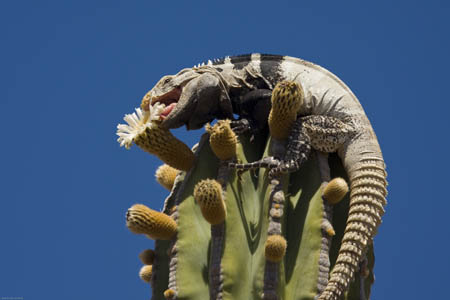
Spiny-Tailed Iguana (Ctenosaura hemilopha conspicuosa) eating Cardon Cactus (Pachycereus pringlei) blossoms. Photo: Ralph Lee Hopkins. All rights reserved. Click here to be taken to the San Diego Natural History Museum
THE WORK OF National Geographic photographer Ralph Lee Hopkins is included in the new show “Baja California” at the Ordover Gallery of the San Diego Natural History Museum. Also on view will be photographs by Octavio Aburto, Pilar Artola, Miguel Angel de la Cueva, Jack Dykinga, Patricio Robles Gil, Flip Nicklin, Abe Ordover, and Julio Rodriguez Ramos. All artwork in The Ordover Gallery is for sale. A substantial portion of proceeds will benefit the museum. For more information, go to: www.ordovergallery.com.
Tags: Baja California > chance of rain > Emily Green > San Diego Natural History Museum
Arachnophiles, rejoice
Posted on | September 28, 2009 | No Comments
EVERY fall, the Butterfly Pavilion of the Natural History Museum of Los Angeles County metamorphoses into the Spider Pavilion. It happened this Sunday. Arachnophiles, rejoice. The Spider Pavilion is officially open. For details, click here. For help identifying the authors of the autumn webs now in most eaves and trees, click here.
This post has been updated. The headline has been changed to reflect this spider lover’s glee.
Tags: chance of rain > Emily Green > Natural History Museum of Los Angeles County > spiders
US Fish and Wildlife Service publishes climate change plan
Posted on | September 28, 2009 | 2 Comments
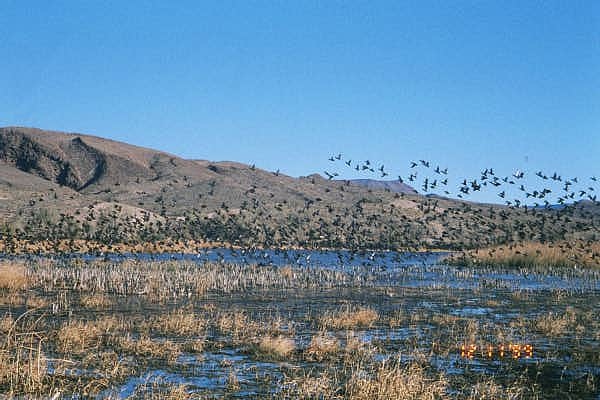
Green-winged teal at Pahranagat National Wildlife Refuge, Lincoln County, Nevada. Source: US Fish and Wildlife Service. Click on the image to be taken to the refuge's website.
The U.S. Fish and Wildlife Service has released its plan for dealing with the effects of climate change on the country’s natural resources, including rising sea levels, the spread of invasive species and changing wildlife migration patterns reports the Riverside Press-Enterprise. The proposed strategy is up for public review and comment until Nov. 23.
To keep reading, click here.
To go to the Service’s draft plan, click here. Via Aquafornia.
For links to a Guardian guide to a draft global agreement on climate change, a Time Magazine article on our “long summer” and a Nature special report, click here.
Tags: chance of rain > climate change > Emily Green > endangered species
The twelve years that were: Desertification
Posted on | September 28, 2009 | 9 Comments
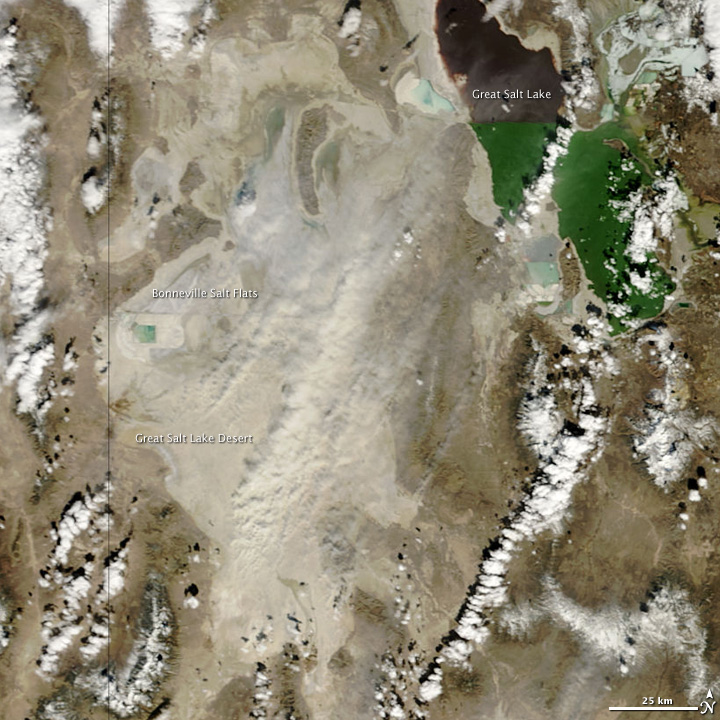
Utah, March 4, 2009. Source: NASA Earth Observatory. Dust blows out of the West Desert, where Las Vegas plans to pump the groundwater. Click on the image to be taken to the Earth Observatory.
Buenos Aires: experts from the United Nations Convention to Combat Desertification (UNCCD) and the World Meteorological Organization (WMO) called for an immediate global response to the increasing number of sand and dust storms. — United Nations Convention to Combat Desertification, September 24, 2009
As defined by the UN Convention, desertification is a process of “land degradation in arid, semi-arid and dry sub-humid areas resulting from various factors, including climatic variations and human activities.” — United Nations Convention to Combat Desertification, June, 1997
The [Las Vegas] pumping project will result in likely irreversible loss of critical native vegetation covering a desert expanse equal in size to the state of Vermont. Where water diversion projects like this have been done before in California and other parts of the world, the result has been exactly what was predicted: more dust, more pollution and more disease. — Salt Lake Tribune comment piece by Dr Brian Moench, president of Utah Physicians for a Healthy Environment, September 25, 2009
Updates after the jump
« go back — keep looking »North American Native Plant Societies
After the lawn

Garden blogs
