Thunk tank
Posted on | January 18, 2010 | 7 Comments
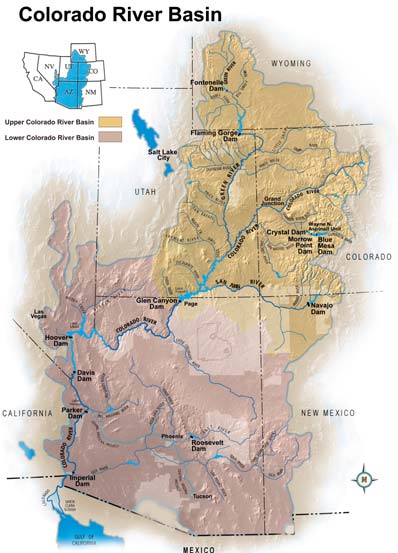 Next Monday, the US House of Representatives Subcommittee on Water and Power will be holding a local hearing at the Los Angeles offices of the Metropolitan Water District of Southern California. The subject?
“California drought solutions.”
If that seems an odd thing to be contemplating during a deluge, it’s not. Most of our water does not come from local rainfall, but from other places, which, if not in a drought, are definitely in a jam. Last week, that jam became orders of magnitude worse as Sacramento judge Roland Candee struck down something called the Quantification Settlement Agreement.
This 2003 wad of contracts profoundly affects how California may legally divide and manage its share of the Colorado River, which is along with Owens Valley in the Eastern Sierra and the Sacramento-San Joaquin River Delta in Northern California one of the three main sources of fresh water for Southern California.
Candee’s voiding of the QSA last week is scary for at least two reasons. First, Southern Californian cities could lose vast amounts of water secured in trades under the agreement. Second, and, most nerve-wracking for this writer, the geniuses behind the QSA are in many cases the same brains behind the much-vaunted package of bills that we’re told will “fix” the ailing Sacramento-San Joaquin River Delta. These bills are due to come before California voters in November in the form of an $11bn ballot measure.
Click here to keep reading on the QSA and deja vu all over again
Rain, explained
Posted on | January 18, 2010 | No Comments
A TREAT arrived with the rain on Sunday, a treat worth breaking from this site’s normal policy of not quoting, referencing or linking to pseudonymous sources.* The Southern Californian meteorologist who blogs on science and home life as “Bad Mom Good Mom” passed on this explanation of our storm.
FIFTH graders in California study the weather. Not surprisingly, my fifth grade daughter and I have been talking about the weather on our walk to school in the mornings. Last week, we discussed the difference between latent and sensible heat and how the increase of surface level moisture can mask the temperature signal of global warming.
I am not sure she got it. I will have to figure out another way to explain that.
In the mean time, I want to better explain why meteorologists are so certain that Los Angeles will be hit by a series of heavy rainstorms … I could have said something about really complex computer models running on really humongous supercomputers. But, in fifth grade, I will be happy if she understands some of the underlying physics. To keep reading the rain explained in terms that a 53-year-old can understand, click here.
*On the subject of pseudonyms, these are entertained on this site only when the person masking their identity is known to the editor as a credible source and holds a job, usually a government position, where their employer takes a dim view of any contact with the press or blogosphere.
The week that was, 1/10-16/2010
Posted on | January 17, 2010 | 2 Comments

Survivors of the Haitian earthquake reach for water packets. Source: Wall Street Journal. Click on the image for the accompanying story and photo gallery
“Water is water. You can’t last long without it.” — Stephanie Bunker, United Nations Office for the Co-ordination of Humanitarian Affairs, “Frantic race against time to get clean water to Haiti quake survivors,” The Guardian, January 16, 2010
This is one of the things Americans do really well. We step up in whatever ways we can. — “Water for Haiti: Now,” Peter Gleick, San Francisco Chronicle, January 13, 2010
Click here to keep reading The week that was
Sow and ye shall reap
Posted on | January 15, 2010 | 1 Comment
 It smelled of sage and spring in the seed room of the Theodore Payne Foundation in Sun Valley this week as supervisor Kathy Parenteau showed how the fruit of their native plant collection is sorted and stored for propagation and sale. Pictured above are the English apothecary spoons that Payne himself used to sort seeds, with the tiny Chalk Dudleya specimens contrasted to the aptly named fruit of the Bigberry Manazanita.
With heavy and persistent rain in the forecast for next week and spring around the corner, now is the time to sow seeds or plant saplings. For information on the seeds from the Theodore Payne Foundation, which are carefully selected for Southern California, click here. Or, for beginners just contemplating converting to native gardening or advanced gardeners always eager to learn more, Chance of Rain has updated the January listings for dry garden courses and events and compiled a new region-wide page for February. March is in the works. To all those who have events that they would like to have listed, please send announcements to emily.green [ @ ] mac.com.
For a National Weather Service storm alert, particularly relevant to those who live in foothill communities near recent burn areas, click here.
This post has been updated.
Tags: chance of rain > dry garden events > Emily Green > Theodore Payne Foundation
Salton Sea et al
Posted on | January 15, 2010 | 1 Comment
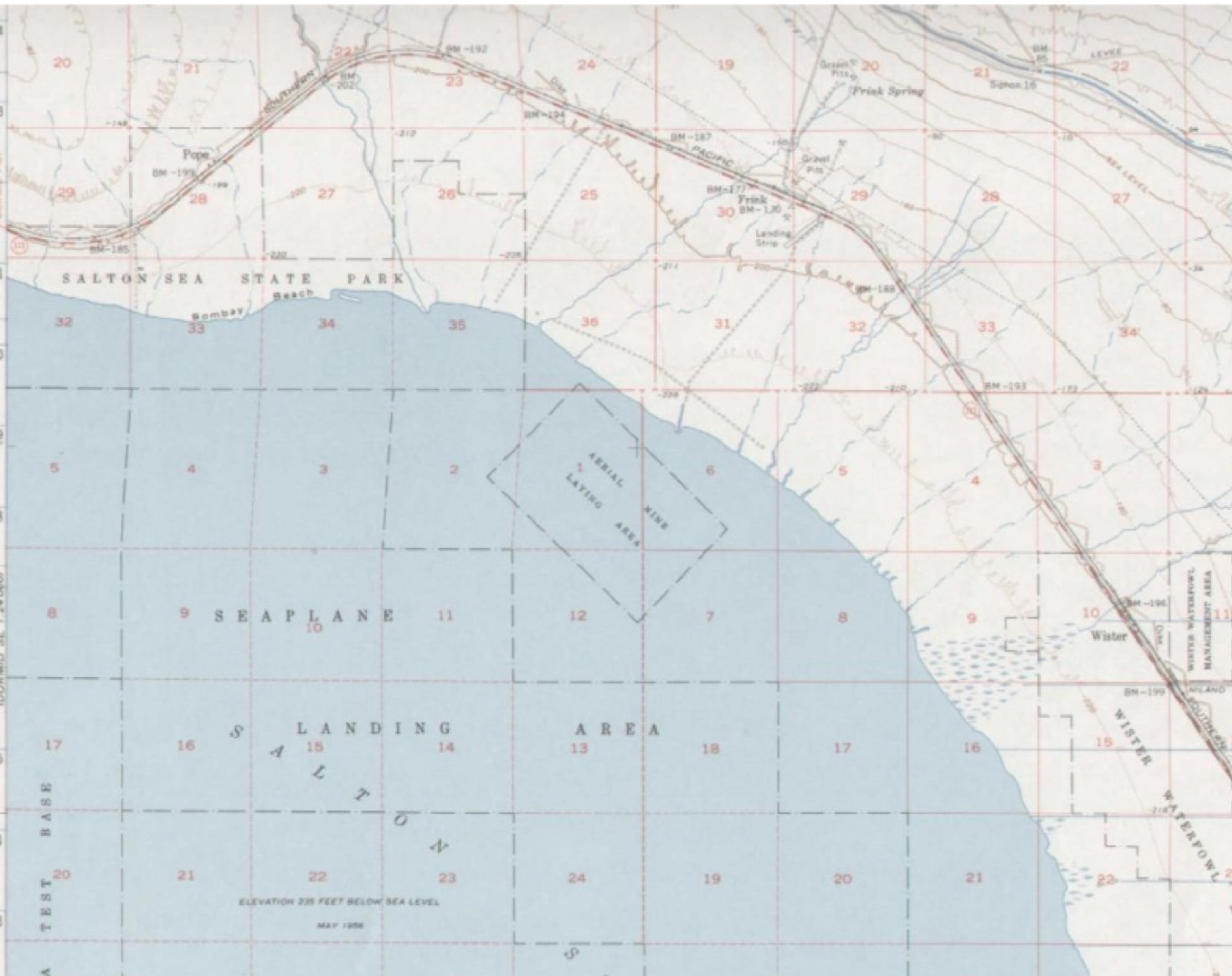
For those who have asked about the impact of of this week’s ruling by Sacramento Superior Court Judge Roland Candee as it affects the Salton Sea restoration deal incorporated in the 2003 Quantification Settlement Agreement and Joint Powers Authority funding agreement (QSA JPA), here are some relevant excerpts from the decision. Copious numbered references have been struck for coherence and eyeball-busting acronyms have been decoded. The full text of the decision is available here.
These edited excerpts come from Sections 6 through 9, pages 33 through 43 of the decision.
“Dealing with the Salton Sea appears to the Court to have been the single most significant environmental issue faced in the QSA process. The Salton Sea is California’s largest lake, located north of the Mexican border at the northern end of the Imperial Irrigation District service area and the southern end of Coachella Valley Water District’s service area.
“It is in a large depression about 230 feet below sea level. The modern Salton Sea was accidentally created when the Colorado River breached a headgate and flowed unimpeded into the Salton Sink for almost two years, starting in 1905.
Click here to keep reading
North American Native Plant Societies

After the lawn

Garden blogs
