High good, low bad: Mead in June 2010
'Colossus' author Michael Hiltzik speculates that Los Angeles Times proprietor Harry Chandler was behind the Hoover administration's hiring of architect Gordon B. Kaufmann to streamline and simplify plans for Boulder (eventually Hoover) Dam. "Early in 1931, Kaufmann began hacking away at Reclamation's architectural scheme (above)," writes Hiltizk, "which was burdened with such neoclassical gingerbread as pediments, elaborate balustrades on the dam crest, and columns capped with bronze eagles." Click on the image to be taken to the Reclamation page about Kaufmann, who also collaborated with the bureau on Parker and Shasta dams.
There is a telling quirk to most US maps of the Colorado River: They stop at the Mexican border. The river’s once-mighty delta and the Sea of Cortez rarely figure.
Save a few forays south, this delineation holds true in the recently published book “Colossus: Hoover Dam and the Making of the American Century“ by Michael …
The week that was: Fracking special
To read about how advances in hydraulic fracturing technology led geologists and energy companies to believe that a previously uneconomic source of natural gas might be tapped in the Marcellus Shale and Appalachian Basin, click on the map to be taken to an overview from Geology.com
Josh Fox’s documentary “GasLand,” broadcast last Monday on HBO, planted the suggestion that as former Vice President Dick Cheney was waging his “war on terror” in the wake of 9/11, his energy task force set America on a path capable of poisoning the drinking water supply of New York City, along with that of Pennsylvania, Delaware, parts of Ohio and West Virginia.
In May 2001, the report of the National Energy Policy Development Group gathered by former Halliburton CEO and then Vice President Dick Cheney concluded, "Most new gas wells drilled in the United States will require hydraulic fracturing." Click on the
The Dry Garden: Coyote mint
Paradise is at once so attainable and so far away.
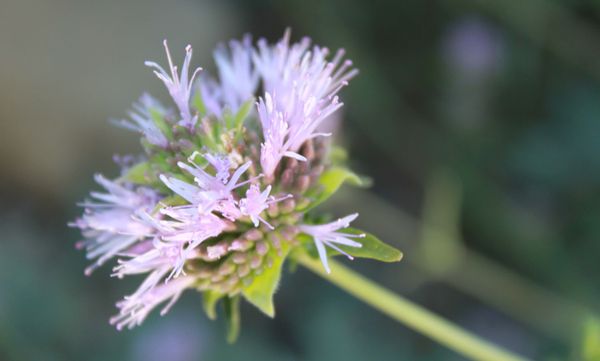
This column was going to be about how the most immediate and affordable thing that Southern California homeowners could do to reduce our collective dependency on fossil fuel would be to rip out lawn. But events in the Gulf of Mexico are too crazy-making to be sure that it wouldn’t be the garden-writing equivalent of picking a fight at the dinner table. So this column is about coyote mint. Click here to keep reading The Dry Garden in the Los Angeles Times.…
From press release to pocketbook
Cadiz, Inc today announced that the Santa Margarita Water District and Three Valleys Municipal Water District have agreed to stand as lead agencies in a review under the California Environmental Quality Act to evaluate the risks of reviving a previously discredited plan to mine Mojave Desert groundwater to serve the Southern Californian urban conurbation.
The share price responded with a jump of more than 14 per cent before declining.
No water has been produced by this 12-year-old scheme, however for the last year skillfully deployed press releases have made Cadiz a volatile and occasionally lucrative stock. It would take a SEC investigation to see if a run on the shares last year involving a privately secured endorsement from the Governor of California amounted to insider trading by directors at the expense of stockholders.
Today’s news about two Southern California water companies …
‘Erin Brockovich’ writ large
Josh Fox standing in a stream that passes by his home in Pennsylvania. Source: HBO. After fracking began in Dimock, Pa., local livestock that drank water near gas mines began losing their hair. Fox took up the subject in the documentary 'Gasland' after his family was offered nearly $100,000 by a company for drilling rights on their land. From the Philadelphia Inquirer. Click here to read its review of 'Gasland.'
For Westerners, the connection between gas and water usually centers on Chromium VI, the chemical once used as a coolant by PG&E gas compressor plants and subsequently the Mojave Desert groundwater pollutant made famous by “Erin Brockovich.”
Yet a far greater, clear and present threat exists to a shared watershed extending from New York to West Virginia and throughout gas fields of the midwest and Texas. That is “hydrofracking,” the process in which chemically laced water is used to fracture …
« go back — keep looking »North American Native Plant Societies

After the lawn

Garden blogs
