‘Red states’ also red on drought map
Posted on | November 15, 2012 | 1 Comment
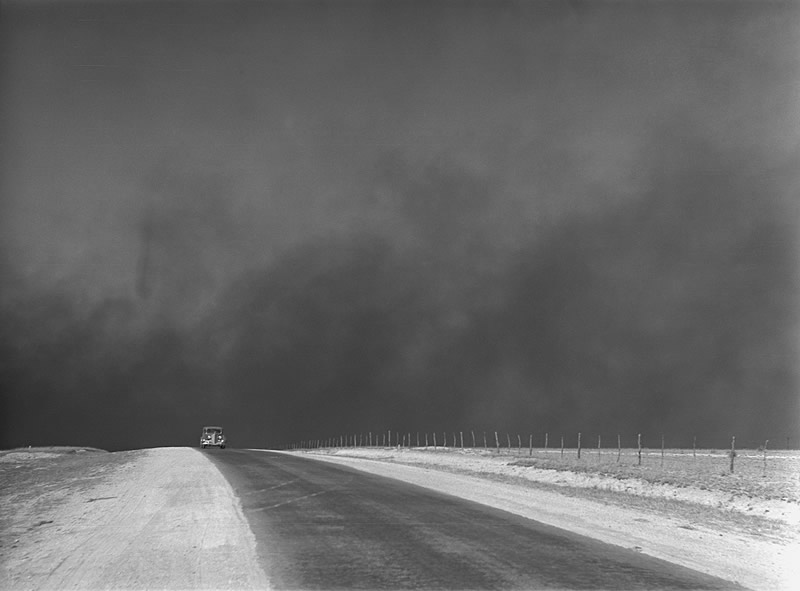
Dust storm in the Texas panhandle, 1936. Photo: Arthur Rothstein via Ken Burns’ “The Dustbowl.” Click on the image to be taken to the site of the new PBS series, which airs this weekend.
Good science is free of politics. Bad politics are free of science. As “red state” legislators conduct a post-mortem on the 2012 election, the smartest and most diligent of them will be crossing the aisle to work with Democratic caucuses to focus on climate change, which these images illustrate is not merely a “blue state” problem in the Sandy-battered Northeast. A good place to start is today’s dispatch from NASA’s Earth Observatory carrying imagery of a November 10 dust storm blowing across the Kansas-Colorado border. The “storm occurred along the Arkansas River, which flows roughly eastward from the Rocky Mountains toward the Mississippi River,” reported NASA.
The storm struck, continued the report, “in the midst of an exceptional drought, according to the U.S. Drought Monitor. By November 2012, the area along the border between Colorado and Kansas had experienced dry conditions for several months, as did a much larger region. In July 2012, the U.S. Department of Agriculture declared the largest natural disaster area in U.S. history due to drought conditions, and this region was part of the disaster area.”
For a previous NASA post about dust storms emanating from the drought-struck Great Plains, click here. For the latest map from the US Drought Monitor, here. Click on the images below to enlarge them. (This post was updated 11/16 to add the Burns documentary photo.)


Tags: chance of rain > Emily Green > NASA Earth Observatory > US Drought Monitor
No news is no news for El Niño prospects
Posted on | November 12, 2012 | No Comments
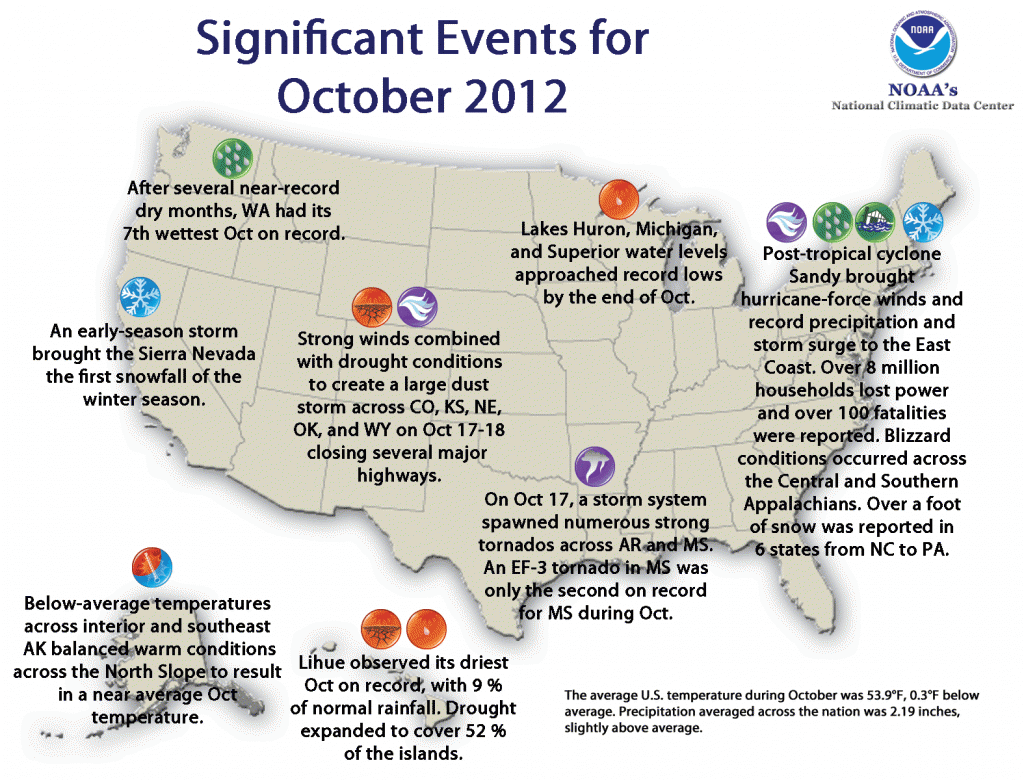
“As of October 30, 60.2 percent of the contiguous U.S. was experiencing drought conditions with the most severe conditions in the Great Plains,” reports the National Oceanic and Atmospheric Administration in its October 2012 “State of the Climate” summary.
Elsewhere, a recent NOAA update on what had looked like an “El Niño” weather system associated with good rain years in Southern California suggests that the system is petering out. “While the development of El Niño, or even La Niña, cannot be ruled out during the next few months,” reads the November 8 update, ” ENSO-neutral is now favored through the Northern Hemisphere winter 2012-13.”
For an explanation of ENSO, an acronym for El Niño / Southern Oscillation, click here. Crudely shorthanded for those of us in the American Southwest, the adjusted forecast means that we have no prevailing trend of equatorial Pacific Ocean temperatures to give us strong hints about how they will affect weather patterns and whether or not this winter will be a drier or wetter sort of rainy season.
High good, low bad: Mead in October 2012
Posted on | November 1, 2012 | 1 Comment
 Pat Mulroy wore a pale yellow and cream-colored ensemble as she warned of disaster on the Colorado River. According to the October address at the WaterSmart Innovations convention by the general manager of the Southern Nevada Water Authority, there “will be headlines all over the country because the news is not good. The news on how many times this basin will go into shortages will be devastating.”
Inspiring the shock and awe will be the Colorado River Basin Water Supply and Demand Study, which, according to compilers at the federal Bureau of Reclamation, is due for publication late this month.
There was no more fitting sartorial choice for doomsaying by the woman who time and again has described Las Vegas as the “canary in the coal mine” of Western water shortages. Anyone interested in the art of wringing water from the desert should watch her speech in this video link from Circle of Blue WaterNews if for no other reason than Mrs Mulroy and Las Vegas are the kind of canary that runs the mine. Click here to keep reading
Autumn is planting season for natives
Posted on | October 29, 2012 | 4 Comments

Culver City garden of furniture designer J. Shields and his wife, accountant Anne Tannen. Shields learned to garden through many years of visiting the Theodore Payne Foundation in Sun Valley. Photo: Emily Green
Days are becoming shorter in our bright place. What rain we may get will be arriving in coming months. It’s planting season in Southern California. November and December are the best months for sowing of wildflower seeds; young plants should go in the ground between November and February. The reason that our gardeners bestir themselves for action just as others across the country are locking up the tool shed? California is the only state in the nation with what geographers call a “mediterranean climate zone.”
Tags: chance of rain > Emily Green > Rancho Santa Ana Botanic Garden > Theodore Payne Foundation
“This evacuation is mandatory”
Posted on | October 28, 2012 | No Comments

Mayor Michael Bloomberg today ordered mandatory evacuation of low-lying areas vulnerable to storm surges as Hurricane Sandy bears down on New York City.
Click here to be taken to New York’s Office of Emergency Management, here for tracking by the National Weather Service.
Tags: chance of rain > Hurricane Sandy > National Weather Service > New York City Office of Emergency Management
North American Native Plant Societies
After the lawn

Garden blogs
